hygiene-precision: distributor of Aquolab products




How to clean bridges
Discover how to clean dental bridge by using ozone and a water flosser. Practical tips for a healthy and long-lasting bridge.
This article was written by the Hygiène Précision team, based on scientific data and rigorous clinical studies. Updated on 16/09/2026
5/6/20266 min read


Maintaining good hygiene around your dental bridge is essential to ensure its longevity and preserve your overall oral health. Unlike a natural tooth, a bridge requires specific care because it doesn't benefit from the same biological defenses against bacteria.
In this article, we explain how to clean your dental bridge with ozone, the importance of using a water jet to clean your dental bridge, and the daily steps to take to avoid complications.
This article contains the following:
Why is dental bridge cleaning important?
A dental bridge, while aesthetically pleasing and functional, can become a breeding ground for bacteria if not properly maintained. Neglected hygiene can lead to several complications:
Loosening of abutment teeth: The natural teeth that support the bridge can deteriorate due to dental plaque and bacteria.
Periodontal diseases: Inflamed gums, bleeding, or even bone loss.
Underlying caries: Even if the bridge covers the tooth, the root or the spaces between the teeth may be affected.
Unpleasant breath: Poor hygiene leads to odors due to accumulated bacteria.
Maintaining rigorous hygiene therefore not only helps to preserve your dental bridge, but also to keep your mouth healthy.
Why is cleaning "under" the bridge crucial ?
If you wear a bridge, you know: aesthetically, the result is stunning. Yet, beneath this technical feat lies a real hygiene challenge. Unlike a natural tooth, the intermediate element (the "bridge" that replaces the missing tooth) does not rest on a root, but simply "overhangs" your gum.
It is precisely in this gap, between the prosthesis and the gingival tissue, that the problems begin.
An ideal niche for anaerobic bacteria
This space is what's called a "blind spot." Food particles easily get trapped there, but rarely come out alone. Deprived of oxygen, anaerobic bacteria multiply at an alarming rate. These are the bacteria responsible for:
Very unpleasant daily odors (local halitosis) .
Gum inflammation (gingivitis) can eventually weaken the abutment teeth that support your bridge.
The formation of subgingival tartar, impossible to remove without professional intervention.
Why are your usual tools reaching their limits?
It is often mistakenly believed that vigorous brushing is sufficient. Unfortunately, the physical reality is different:
The classic toothbrush: Its bristles simply cannot fit under the base of the bridge. It cleans the surface, but leaves the "contact area" completely untouched.
Interdental brushes: Although effective for the sides, they are often too rigid or too wide to pass under the intermediate without injuring the gum or bumping against the structure of the bridge. Discover our article "Interdental brushes: warnig!"
"Superfloss" or dental floss: It's a decent solution, but its handling is tedious, technical, and many users end up abandoning the routine due to lack of time.
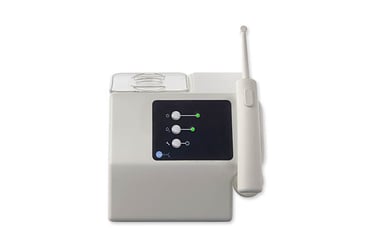
Best water flosser for bridges: Aquolab home
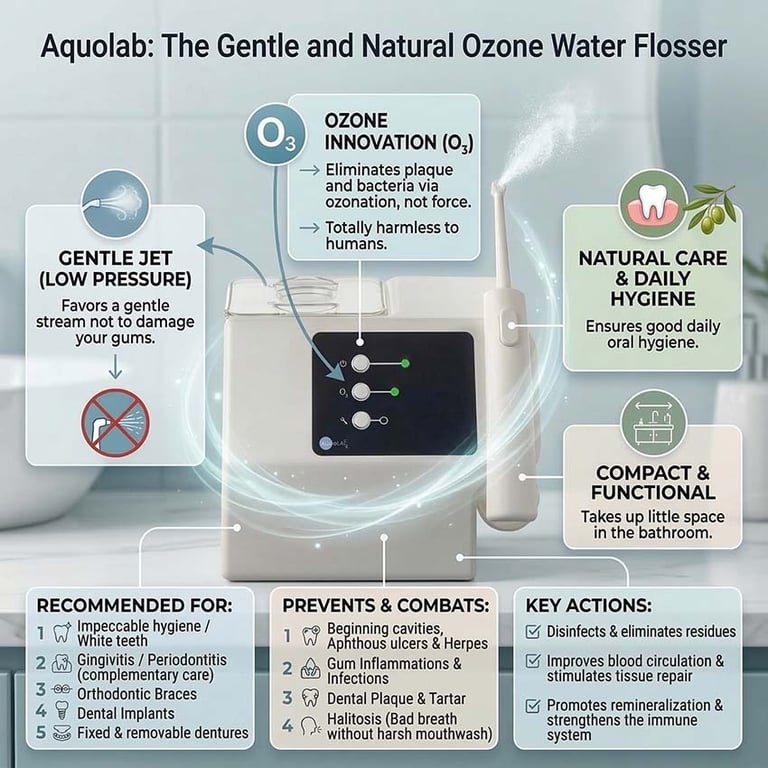
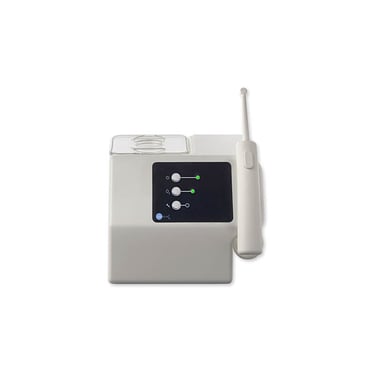
This is where technology changes the game. Where the brush bristles stop, the pulsed jet of the Aquolab ozone water flosser takes over.
Thanks to its fine texture and controlled pressure, the water seeps into every nook and cranny under your bridge to mechanically dislodge debris. But the real secret lies in the ozonated water: ozone is a powerful natural disinfectant that instantly eradicates anaerobic bacteria nestled under the bridge.
In a single pass, you not only "clean", you sterilize the space to guarantee the longevity of your bridge and the freshness of your breath.
Studies show that the Aquolab water flosser effectively cleans and disinfects under bridges, reducing bacteria, plaque, and inflammation without side effects. Its antimicrobial and healing action improves gum health and healing. It also strengthens local immunity and limits chronic infections. Sources: Journal of Orofacial Sciences , PubMed


How to clean underneath a bridge?
Discover our Aquolab products for cleaning permanent dental bridge or removable dental bridge:
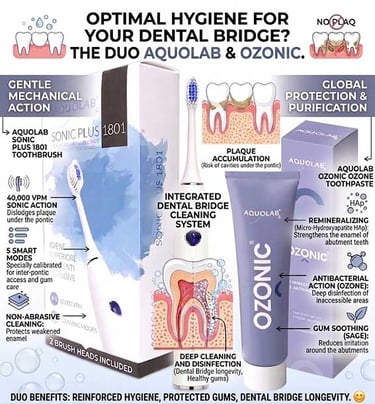
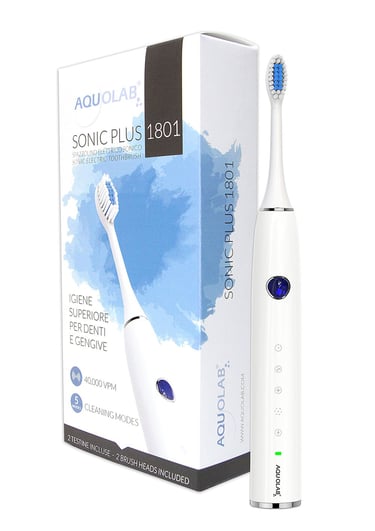
1. Proper brushing with a sonic brush
Frequency: Brush your teeth at least twice a day , ideally after each meal.
Recommended equipment:
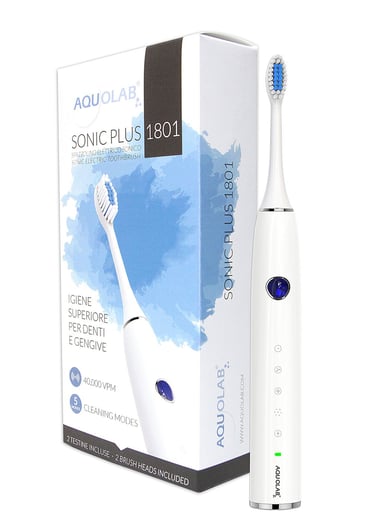
A sonic toothbrush with soft bristles.
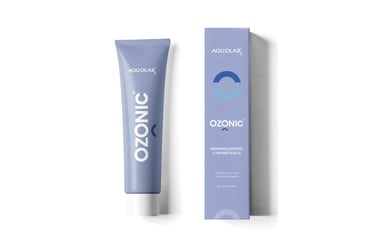
A toothpaste enriched with ozone for its natural antibacterial properties.
Technique:
Angle the brush at 45° towards the gum.
Clean all surfaces of the bridge, including the underside.
Pay particular attention to the spaces between the teeth and under the bridge.
Dental bridge cleaning at home
2. The use of a specific oral irrigator for bridges (water flosser)
The dental jet, also called a water flosser, is a valuable ally in the maintenance of bridges.
Why this is useful:
It dislodges food residue stuck under the bridge.
It reduces plaque buildup, even in areas inaccessible to the brush.
Effective tip: Opt for an ozone water flosser, which combines water pressure with a powerful antibacterial effect.
Instructions for use:
Direct the jet nozzle towards the areas between the bridge and the gum.
Adjust the pressure according to your comfort.
Use slow movements to thoroughly clean each area.
3. Antibacterial ozone treatments
Ozone, known for its antiseptic properties, can be incorporated into your oral hygiene routine:
Ozonated oil mouthwash: Use after brushing for prolonged action against bacteria.
Local application: In case of sensitive gums or the beginnings of inflammation.
Benefit: Ozone reduces inflammation, fights anaerobic bacteria and promotes the healing of gingival tissues.
4. The annual check-up with your dentist
Frequency: Every 6 months, or as recommended by your practitioner.
Objective:
Detect any underlying problems (cavities, detachment, inflammation...).
Perform a professional descaling and deep cleaning.

Dental bridge types
Removable Dental Bridge
A removable dental bridge is designed to replace one or more missing teeth while allowing the patient to take it out for cleaning and maintenance. It typically consists of replacement teeth attached to a gum-colored acrylic base, sometimes supported by a lightweight metal framework. This option is often more affordable than fixed solutions and may be recommended as a temporary restoration or for patients who are not suitable candidates for permanent dental treatments. However, removable bridges generally provide less stability and comfort than fixed alternatives.
Permanent Dental Bridge
A permanent dental bridge is a fixed restoration that is securely attached to the natural teeth or dental implants on either side of the gap. Unlike removable options, it remains in place and functions much like natural teeth, offering greater stability, durability, and chewing efficiency. Permanent bridges can be made from materials such as porcelain, ceramic, zirconia, or porcelain fused to metal, providing both strength and a natural appearance. With proper oral hygiene and regular dental checkups, a permanent dental bridge can last for many years while restoring both function and aesthetics.
Additional tips for preserving your dental bridge
Avoid hard or sticky foods: They can damage the bridge structure or destabilize the abutment teeth.
Limit sugar: Reduce bacterial growth and the risk of cavities.
Stop smoking: Tobacco damages gum health and promotes infections.
Listen to your mouth: Pain, bleeding or persistent bad breath are warning signs.
Dental bridge cleaning: What you need to know
To keep your bonded or traditional dental bridge in excellent condition:
✅ Brush your teeth with a soft brush and ozone toothpaste.
✅ Use a water flosser to clean your dental bridge, preferably one with ozone for enhanced cleaning action. ✅ Incorporate ozone
-based products (oil or mouthwash) into your routine. ✅ See your dentist regularly.
Good dental bridge hygiene is key to avoiding complications and prolonging the life of your prosthesis. If you have any doubts, consult your healthcare professional.
Continue reading...
© 2024. All rights reserved.