hygiene-precision: distributor of Aquolab products




Electric Toothbrush 2026: Expert Guide
Sensitive gums or plaque control? Discover how to choose your electric toothbrush (sonic vs rotary) in our expert guide.
This article was written by the Hygiène Précision team, based on scientific data and rigorous clinical studies. Updated on 05/09/2026
5/6/20264 min read
Do you want to improve your oral hygiene, but don't know how to choose an electric toothbrush in 2026 from the multitude of models available? Don't panic! In this comprehensive guide, we explain everything you need to know to make the right choice, according to your needs, your budget, and the available technologies.
This article contains the following:

Electric toothbrush benefits
According to the French Union for Oral Health (UFSBD) , the electric toothbrush is an effective tool that facilitates efficient brushing while respecting the gums when used with soft brush heads. The UFSBD points out that it helps to better remove dental plaque , particularly for people with imperfect brushing technique, while simplifying daily oral hygiene routines. It reduces the risk of gingivitis and helps maintain whiter teeth.
Rotating toothbrush vs. Vibrating
Choosing between a rotating and a vibrating (sonic) toothbrush depends on your oral health needs, brushing habits, and personal preferences. Both types of electric toothbrushes remove plaque more effectively than a manual toothbrush when used correctly, but they rely on different cleaning technologies. Understanding how each one works can help you choose the best toothbrush for healthier teeth and gums.
1. The rotating toothbrush
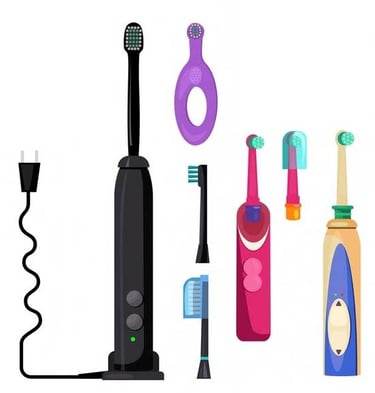
Rotary toothbrushes have a round head that performs circular, oscillating-rotating movements. They are generally more affordable and suitable for most users.
Advantages: attractive price, proven effectiveness
Disadvantages : not suitable for sensitive gums
Ideal for: beginners, those on a tight budget
2. The vibrating toothbrush: the electric toothbrush recommended by dentists
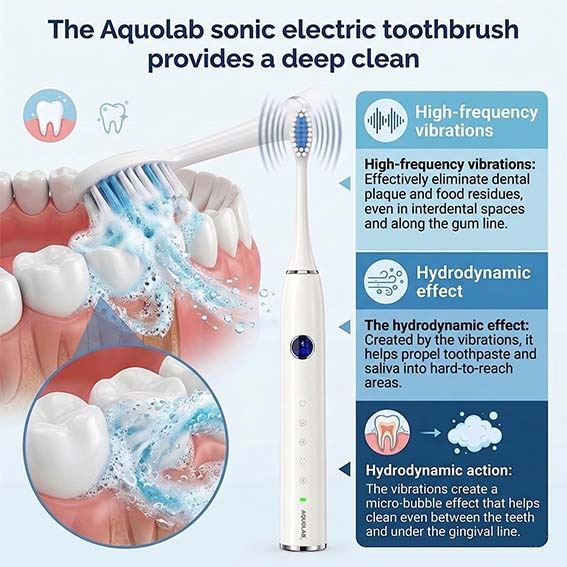
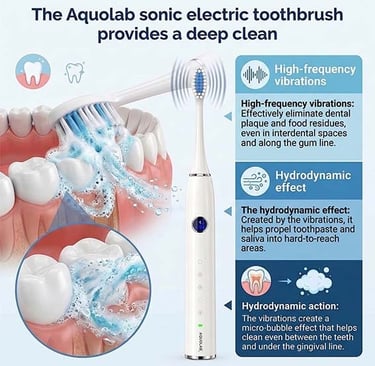
Vibrating toothbrush or Sonic toothbrushes use high-frequency vibrations, thanks to hydrodynamic technology. These vibrations create microbubbles that clean deeply, even between teeth.
Advantages: gentler on gums, better interdental brushing thanks to the microbubbles of toothpaste and oxygen.
Disadvantages : possibly more expensive than some rotating toothbrushes
Ideal for: sensitive gums, people prone to periodontal disease
The added bonus: rechargeable toothbrushes with better battery life over time.
👉 Can't decide between the two? Check out our section: "Choosing a sonic or rotary toothbrush" below to help you decide.
Verdict: If you have sensitive gums or are looking for a deep clean, opt for a sonic toothbrush. Otherwise, a rotating toothbrush will be perfectly suitable for daily use, taking care not to irritate your gums.
Best electric toothbrush: technology, features and price
Choosing the best electric toothbrush depends on your oral health needs, lifestyle, and budget. While all electric toothbrushes are designed to remove plaque more effectively than a manual toothbrush, the right model should combine efficient cleaning, gentle brushing, and practical features that encourage good daily habits. Before making your choice, consider the key factors below to find a toothbrush that suits your teeth and gums.
Technology
Rotary: simple and efficient
Sonic: ideal for deep cleaning and sensitive gums
The brush head
Size: opt for a compact head to reach difficult areas
Bristles: soft and supple so as not to damage enamel or gums
Brushing programs
Sensitive: for fragile gums
Daily cleaning: for normal use
Bleaching: to remove superficial stains
Battery life
A battery life of at least one month is recommended to avoid frequent recharging.
Additional features
Built-in timer: to ensure you brush for 2 minutes.
Pressure sensor: alerts you if you press too hard
Smart guidance via app: for connected models
The price
Determine your budget. Basic models start at around $20, while high-end models can exceed $250.
Best electric toothbrush for sensitive gums
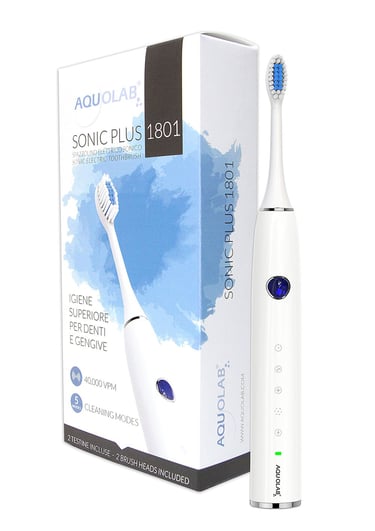
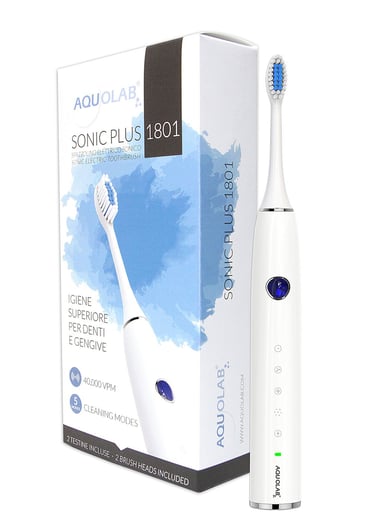
Aquolab 1801, arguably the best electric vibrating toothbrush
The Aquolab 1801 sonic toothbrush is particularly recommended for people suffering from periodontitis, receding gums, or bleeding gums thanks to its deep yet gentle cleaning action. Its micro-vibrations help to better remove plaque, which is responsible for inflammation, and limit tartar buildup, even in hard-to-reach areas. Gentler than manual or aggressive rotary brushing, it helps protect tooth enamel and weakened gums while improving daily oral hygiene. This is why Aquolab has chosen this hydrodynamic technology, which is kind to gums and tooth enamel.
Oral health tips for adults
Replace the head every 3 months or as soon as the bristles are worn.
Complete brushing with a water flosser ideally with ozone and low pressure, to clean between teeth and achieve perfect disinfection.
Don't neglect your hygiene, which is essential to prevent cavities and gum inflammation.
See your dentist regularly, at least once a year.
In summary: how to choose your electric toothbrush?
Your choice of electric toothbrush depends on:
of the technology (rotary or sonic),
depending on your specific needs (sensitive gums, whitening, etc.),
within your budget,
and desired features.
By taking these criteria into account, you will know which electric toothbrush model to choose to optimize your oral hygiene and preserve your smile.
Continue reading...
© 2024. All rights reserved.