hygiene-precision: distributor of Aquolab products




Peri-implant disease | Peri-implant treatment
Pain, bleeding or swelling around your dental implant? Discover the symptoms of peri-implant and how to treat this infection.
This article was written by the Hygiène Précision team, based on scientific data and rigorous clinical studies. Updated on 31/08/2026
5/6/20266 min read
Dental implant infection
Are you experiencing unusual pain , swelling, or bleeding gums around your prosthesis? Be aware that these could be the first signs of a dental implant infection. While implants are an aesthetic and long-lasting solution, they are unfortunately not immune to bacterial attacks.
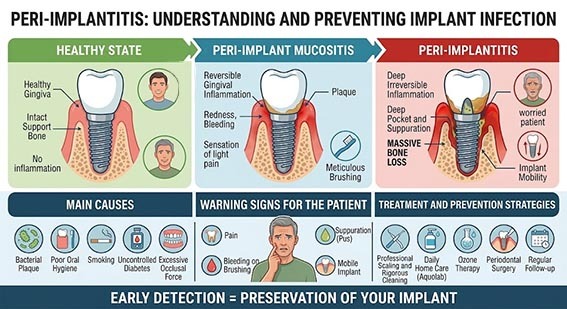
If the inflammation remains superficial, it is called peri-implant mucositis, a condition that is fortunately reversible. However, without prompt treatment, it can develop into peri-implantitis. This much more serious condition directly attacks the bone tissue supporting the implant, significantly increasing the risk of loosening and loss of the prosthesis.
Don't let worry take hold. Discover how to identify the symptoms of this disease, its causes, and most importantly, what treatment for peri-implantitis to adopt to protect your implants in the long term.
This article contains the following:
Pain after a dental implant: normal or worrying?
Pain following a dental implant procedure is common. It is related to tissue healing and the body's normal reaction.
How long does the pain last?
3 to 5 days on average
Gradual decrease after 48 hours
Sensitivity may last up to 1 to 2 weeks
⚠️ On the other hand, persistent or intensifying pain may signal a dental implant infection or the beginning of peri-implantitis.
Peri-implant disease definition
Peri-implant disease refers to inflammatory conditions that affect the soft and hard tissues surrounding a dental implant. These diseases are primarily caused by the accumulation of bacterial biofilm around the implant, triggering an immune response that can damage the supporting tissues if left untreated.
Peri-implant disease is generally classified into two stages:
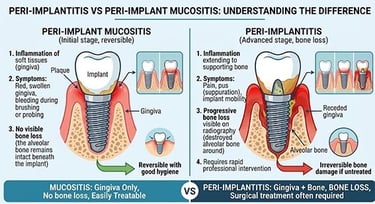
Peri-implant mucositis, a reversible inflammation limited to the soft tissues surrounding the implant. Common signs include redness, swelling, and bleeding during brushing or probing, without any loss of supporting bone.
Peri-implantitis, a more advanced condition characterized by inflammation associated with progressive bone loss around the implant. In addition to bleeding and swollen gums, patients may experience suppuration, increased pocket depth, implant mobility in severe cases, and, ultimately, implant failure if treatment is delayed.
Early diagnosis and appropriate treatment are essential to stop disease progression and preserve the long-term stability of dental implants. Maintaining excellent oral hygiene and attending regular professional maintenance appointments are the most effective strategies for preventing peri-implant disease.
Peri-implant disease vs peri-implant mucositis
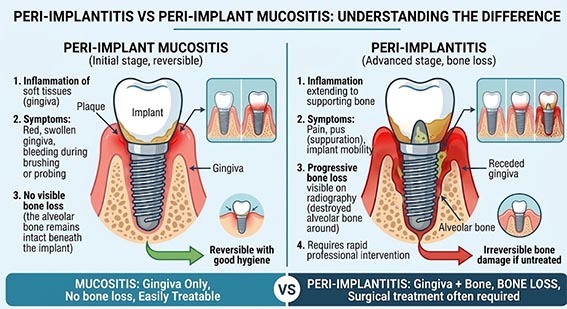
Peri -implantitis is an inflammation of the tissues around the implant, affecting both the gum and the bone, with possible formation of a periodontal pocket.
Not to be confused with peri-implant mucositis:
Mucositis: superficial, reversible inflammation without bone involvement
Peri-implantitis: deep inflammation with irreversible bone loss
Peri-implantitis symptoms
The signs may be subtle at first, but certain symptoms should raise concern:
Bleeding gum around the implant
Redness and swelling (inflammation)
Persistent dental implant pain
Bad breath linked to bacterial plaque
Presence of pus
Sensation of looseness or dislodgement of the implant
👉 The presence of tartar and biofilm promotes the worsening of these symptoms.
Peri-implant disease causes
Peri-implant diseases ranging from reversible mucositis to progressive peri-implantitis develop when the delicate biological seal around a dental fixture is compromised. While bacterial biofilm remains the primary trigger, systemic health status and biomechanical integrity also play critical roles in tissue breakdown. The peri-implant disease causes are:
1. Inadequate Oral Hygiene
The primary driver of peri-implant disease is the accumulation of bacterial biofilm along the implant collar. Unlike natural teeth, dental implants lack a periodontal ligament and connective tissue fibers inserted directly into the root surface, making surrounding tissues far more vulnerable to rapid bacterial invasion. Without thorough daily brushing and dedicated interdental cleaning (such as interdental brushes or water flossers), persistent plaque triggers chronic mucosal inflammation, progressive pocket deepening, and subsequent bone loss.
2. Systemic & Lifestyle Risk Factors
General physiological health heavily influences how peri-implant tissues react to bacteria and repair over time:
Tobacco Use: Nicotine and toxic combustion by-products constrict microvascular blood flow, impair immune cell function, and significantly elevate the risk of implant failure.
Uncontrolled Diabetes: Elevated blood glucose levels impair wound healing, induce collagen degradation, and amplify inflammatory responses to biofilm.
Systemic Inflammatory Conditions: Pre-existing periodontitis, autoimmune disorders, and genetic susceptibilities compromise overall host defense mechanisms around the fixture.
3. Biomechanical & Iatrogenic Factors
Non-bacterial mechanical stressors can create environments that accelerate tissue damage or complicate maintenance:
Unfavorable Load Distribution: Severe occlusal overload or parafunctional habits (like bruxism) transmit excessive stress to the bone-implant interface, accelerating marginal bone resorption.
Subgingival Residual Cement: Excess luting cement extruded beneath the gingival margin acts as a foreign body, irritating soft tissue and harboring virulent bacterial colonies.
Improper Implant Positioning: A fixture placed outside optimal three-dimensional biological boundaries often results in thin or absent buccal bone, soft tissue recession, and hard-to-clean contours that trap plaque.
Diagnosis of peri-implantitis
The diagnosis is based on:
Clinical examination (bleeding, inflammation)
Measurement of periodontal pockets
X-ray to assess bone tissue loss
Regular monitoring allows for the detection of peri-implant mucositis before it develops into peri-implantitis.
Peri-implant disease treatment
The treatment of peri-implantitis depends on the stage:
Non-surgical phase
Plaque and tartar removal
Disinfection (ultrasound, laser, sometimes ozone)
Improved oral hygiene
Surgical phase
Deep cleaning
Pocket reduction
Bone tissue regeneration (grafting)
🎯 Objective: to stop the infection and prevent the implant from becoming dislodged
Peri-implant mucositis treatment | how to treat a dental implant infection at home
The French Union for Oral Health (UFSBD) recommends using a water flosser as a useful complement to removing plaque between teeth and under the gum line, where a regular toothbrush is insufficient for daily use. The water flosser, with its controlled pressure, is gentler and kinder to the gums than interdental brushes.
Best water flosser for dental infection
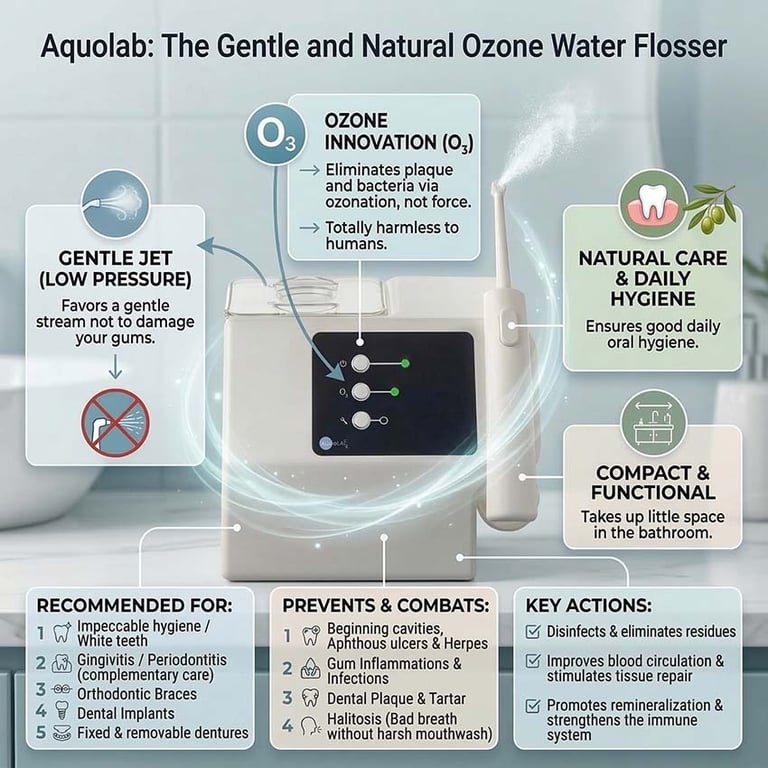
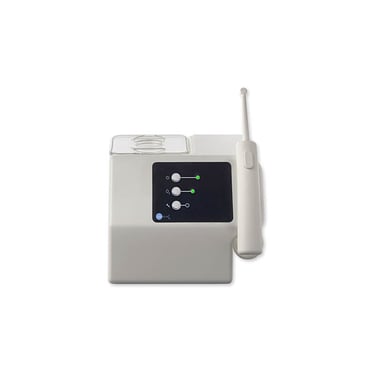
The Aquolab ozone dental jet
stands out as an innovative solution
for deep cleaning around dental implants.
Thanks to the micro-diffusion of ozonated water, it allows for gentle and natural disinfection of interdental spaces, gums, and peri-implant areas.
Why ozone?
Ozone has effective antibacterial and disinfectant properties against dental plaque, significantly reducing bacteria responsible for cavities, gingivitis and oral infections, while complementing conventional brushing ( study on ozonated water and dental plaque ; review on ozone in dentistry ).
When used in oral hygiene, ozone contributes to:
to eliminate the anaerobic bacteria responsible for peri-implantitis without damaging the titanium of the implant
Limit gum inflammation
Improve the feeling of cleanliness and freshness
The Aquolab ozone dental jet can therefore be perfectly integrated into the daily routine of patients with dental implants, in addition to brushing and professional check-ups.
A four-year study demonstrates that thanks to Aquolab ozonated water, used before and for three weeks after dental implant placement, the mouth benefits from deep, natural, and safe disinfection. This technology creates ideal conditions for healthy healing and a stable result, for a long-lasting implant. Source: 2018_08_21_Marconcini_et_al-2018-Clinical_Implant_Dentistry_and_Related_Research
The importance of thorough brushing
Aquolab offers a range of complementary products designed to optimize the oral care of dental implants.
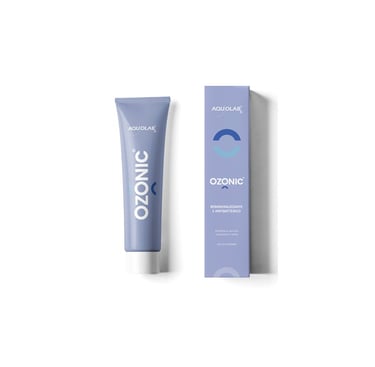
The best antibacterial toothpaste for dental implant
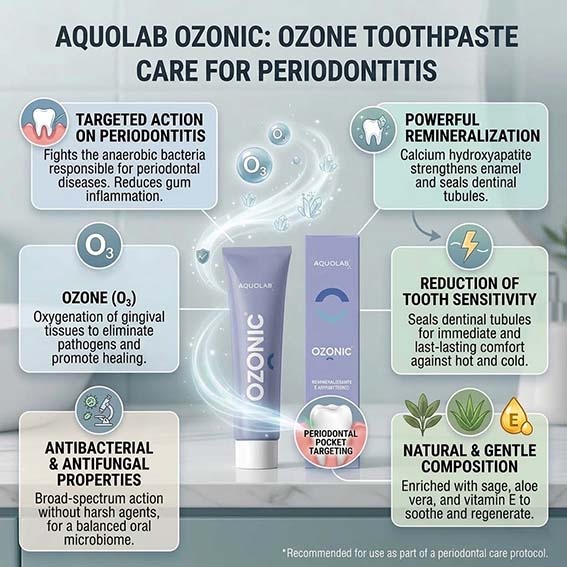
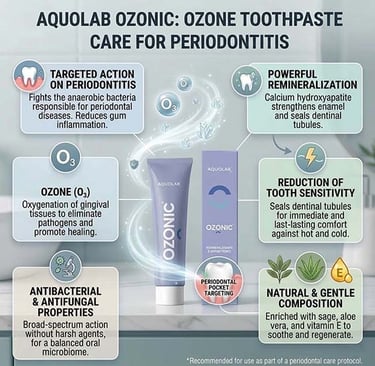
Aquolab's Ozonic toothpaste contains stabilized ozone microbubbles
and gum-friendly ingredients. Daily use helps to:
Maintaining a healthy oral environment
Reduce the formation of bacterial plaque
Protecting sensitive peri-implant tissues
Promote remineralization
It is perfectly suited to patients prone to mucositis or peri-implantitis, who are looking for a non-abrasive and soothing toothpaste.
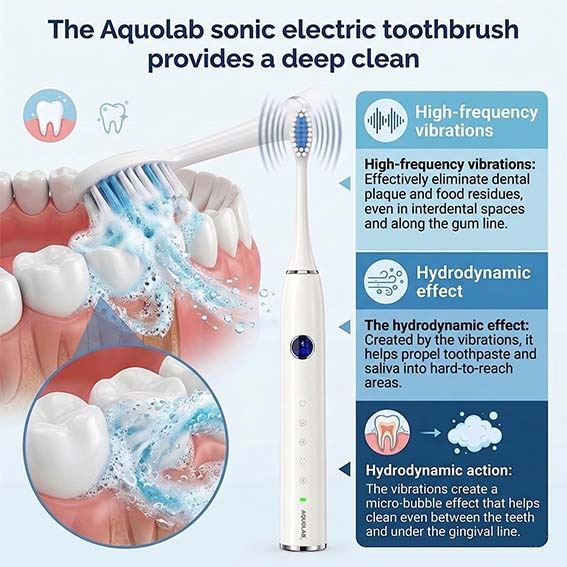
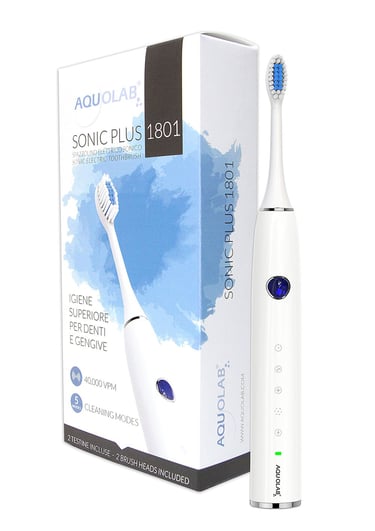
The UFSBD recommends the use of an electric toothbrush to improve brushing efficiency while respecting sensitive gums.
The best toothbrush for dental implant without traumatizing gums
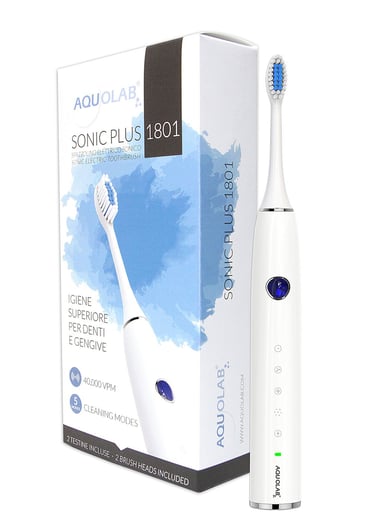
The Aquolab sonic toothbrush offers high-frequency brushing to effectively remove plaque, even in hard-to-reach areas around implants. Thanks to its gentle and precise movements, it promotes impeccable hygiene without traumatizing gums, which are often more fragile around implants.
Peri-implant disease prevention
Good prevention relies on a rigorous implant hygiene routine:
Essential actions
Brush 2 to 3 times a day
Use interdental brushes if you don't have a water flosser. Be careful with your gums!
Cleaning with a water flosser
These actions help to eliminate bacterial plaque before it turns into tartar.
When to consult a dentist?
Check quickly if you observe:
Persistent inflammation
Bleeding gum around the implant
An unusual pain
A feeling of mobility
Early diagnosis often allows treatment of peri-implantitis without major surgery.
Conclusion: Preventing peri-implantitis on a daily basis
Peri -implantitis is not inevitable. It is directly linked to the balance between bacteria, hygiene and periodontal health.
Adopting a complete routine including brushing, water flosser, and possibly the use of ozone based solutions, helps to limit the risks of dental implant infection and prevent implant loosening.
👉 Rigorous daily maintenance is the best guarantee for keeping implants healthy and long-lasting.

Continue reading...
© 2024. All rights reserved.