hygiene-precision: distributor of Aquolab products




Best hydroxyapatite toothpaste 2026 recommended by dentists
Discover why toothpaste with natural micro hydroxyapatite and ozonated oil is the best hydroxyapatite toothpaste for remineralizing enamel.
This article was written by the Hygiène Précision team, based on scientific data and rigorous clinical studies. Updated on 15/08/2026
5/6/20266 min read
Choosing the best hydroxyapatite toothpaste is no longer just about taste or freshness. Today, consumers are looking for healthier, more natural, and above all, effective solutions to protect their teeth. While fluoride has long been the go-to ingredient, its use is increasingly the subject of debate.
In this context, hydroxyapatite, a mineral naturally present in enamel and dentin, is emerging as a credible alternative. But all hydroxyapatites are not created equal: should you choose the micro version of natural origin or the nano version of synthetic origin ? And what are the benefits of the innovative combination of micro hydroxyapatite with ozonated oil?
This article contains the following:
What is hydroxyapatite in toothpaste?
Far from being just another chemical additive, hydroxyapatite is the fundamental building block of your teeth, offering a highly effective, biologically compatible way to restore oral health:
A natural component of our teeth
Hydroxyapatite is a calcium phosphate that makes up more than 90% of our enamel and about 70% of dentin. It is thanks to hydroxyapatite that our teeth are hard, resistant, and able to withstand daily aggressions.
A biomimetic ingredient
When used in toothpaste, hydroxyapatite has the unique ability to mimic the structure of enamel and fill micro-fissures. It also promotes remineralization and reduces tooth sensitivity. Unlike fluoride, which primarily acts through a protective chemical layer, hydroxyapatite physically and directly rebuilds the tooth surface.
Nano vs Micro-Hydroxyapatite : what are the differences for your teeth ?
While both forms share the same core mineral identity, their particle size significantly impacts how they interact with your enamel, their safety profile, and regulatory requirements:
Synthetic nano hydroxyapatite
Produced in the laboratory, with extremely fine particles (< 100 nm).
Excellent ability to penetrate micro-defects in the enamel.
Costly manufacturing, non-natural origin , and questions remain about the safety of repeated exposure to nanoparticles in the oral cavity.
European regulations also require a specific mention when an ingredient is in nano form, evidence of increased vigilance.
Why we chose to exclude nano-hydroxyapatite from our formulas
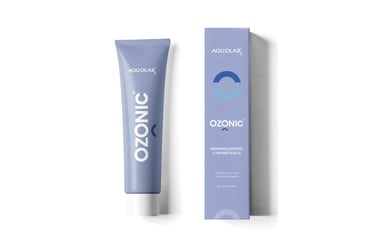
Toothpastes containing micro-hydroxyapatite are preferable to those containing nanoparticles. Their larger molecular size limits the potential risk of penetration into tissues and the body, while maintaining excellent efficacy in remineralizing enamel and reducing tooth sensitivity like Aquolab Ozonic toothpaste. They thus offer a safer and more regulated solution.
Natural micro-hydroxypatite
Extracted from natural sources (e.g., mineral bio-pathy).
Particle size closer to the natural structure of enamel (greater than 100 nm).
Less risk of unwanted entry into the body.
More respectful of the biological balance of the mouth.
Proven remineralizing effect comparable to, or even superior to, fluoride in the long term.
👉 In summary: naturally sourced micro hydroxyapatite offers a safer, more ecological and better tolerated profile, while maintaining remarkable efficacy.
Comparative studies already show that hydroxyapatite can offer remineralization equivalent to that of fluoride toothpastes. For example, Tschoppe et al. demonstrated that hydroxyapatite-based toothpastes remineralize enamel lesions as effectively as fluoride toothpastes (Tschoppe et al., 2011).
Hydroxyapatite toothpaste benefits
As the primary mineral found naturally in enamel, hydroxyapatite delivers a clinically proven approach to repairing, protecting, and revitalizing your teeth through several key mechanisms:
Natural Remineralization
By attaching directly to the enamel, hydroxyapatite fills in weakened areas and strengthens the structure of the teeth.
Reduction of tooth sensitivity
By blocking exposed dentin tubules, it acts as a natural "mineral bandage" against pain associated with sensitive teeth.
Protection against cavities
Unlike fluoride, which works by making enamel more resistant to acid, hydroxyapatite actively repairs and limits the adhesion of bacteria to the tooth surface.
Whiteness and radiance
Its gentle mechanical action helps to remove superficial stains without damaging the enamel, contributing to a naturally brighter smile .
A clinical study conducted by Najibfard et al. confirmed that regular use of a hydroxyapatite toothpaste reduces the progression of initial caries and promotes remineralization, with results comparable to fluoride toothpastes (Najibfard et al., 2011).
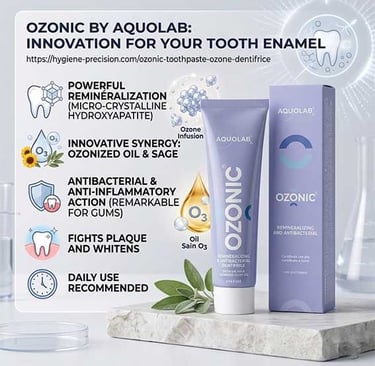
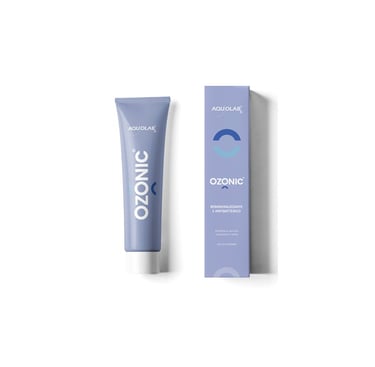
Best hydroxyapatite toothpaste 2026 : Ozonic
By pairing the restorative strength of micro-hydroxyapatite with the natural antibacterial power of ozonated oil, Ozonic delivers a comprehensive, fluoride-free solution designed specifically for adult oral care:
What is ozonated oil?
This is a vegetable oil, often olive oil, enriched with ozone. Ozone , known for its oxidizing power, is stabilized in the oil and releases its antimicrobial and healing properties.
A recent study confirms the benefits of ozone combined with hydroxyapatite for repairing early enamel damage: Scientific Reports 2020 study
The advantages of synergy
Repairing action: Hydroxyapatite micro-rebuilds and strengthens enamel.
Sanitizing action: ozonated oil reduces bacterial load, balances the oral microbiota and promotes gum healing.
Anti-inflammatory action: it soothes sensitive or bleeding gums.
Double protection: less risk of cavities, less inflammation, better overall oral health.
A smart alternative to fluoride toothpaste
No risk of overdose: unlike fluoride, which can cause fluorosis in excess.
Suitable for everyone: children, adults, pregnant women, people sensitive to fluoride.
Holistic approach: acts on both the tooth and the oral environment (enamel + gums + microbiota).
The effectiveness of ozonated oil in oral wound healing has been demonstrated, notably in a study where it significantly improved the healing of palatal wounds after gingival grafting (Ozdemir et al., 2013). Combined with micro-hydroxyapatite, it provides a dual action: remineralization and cleansing.
Testimonial from a dentist and user: " As a professional, I consider Ozonic toothpaste an excellent ally for daily oral hygiene : the presence of ozonated oil and hydroxyapatite provides a gentle antibacterial and remineralizing action. As a consumer, I appreciate its delicate feeling of freshness and its good tolerance." IR
Best hydroxyapatite toothpaste for sensitive teeth
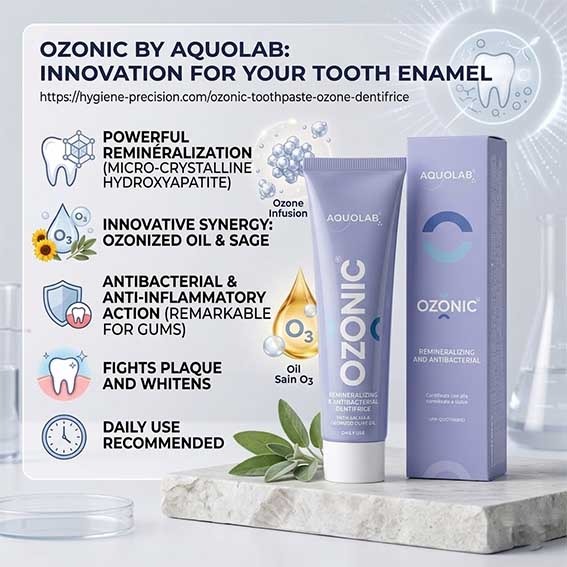
Aquolab OZONIC is the best hydroxyapatite toothpaste to reduce tooth sensitivity. This reduction is due to the remineralizing action of natural hydroxyapatite, which strengthens enamel and limits microcracks. Its active ozone helps to soothe inflammation and deeply cleanse the mouth. Used daily, it protects sensitive teeth while promoting fresh breath and healthy gums.
Does hydroxyapatite whiten teeth better than fluoride?
Hydroxyapatite does not bleach teeth like peroxide-based whitening agents, but it can help improve the appearance of your smile by repairing microscopic imperfections on the enamel surface. As enamel becomes smoother and more uniform, teeth may reflect light better and appear brighter. Fluoride, on the other hand, is primarily used to strengthen enamel and prevent cavities rather than enhance tooth color. While neither ingredient is considered a true whitening agent, hydroxyapatite may provide a more noticeable cosmetic improvement by restoring the enamel surface, whereas fluoride offers little direct whitening effect.
Why choose a natural toothpaste over hydroxyapatite?
Choosing a natural formula powered by micro-hydroxyapatite allows you to protect your oral health effectively without compromising on ingredient purity, biocompatibility, or safety:
For safety
No nanoparticles, no potentially toxic fluorine.
For overall effectiveness
An action that is simultaneously reconstructive, protective and antibacterial.
For naturalness
Ingredients of natural origin, respectful of the body and the environment.
For the future of preventive dentistry
Research shows that these formulations represent a promising avenue, reconciling proven efficacy and long-term safety.
Hydroxyapatite in toothpaste: danger?
Hydroxyapatite, used in some toothpastes to strengthen enamel and reduce tooth sensitivity, is often presented as a natural alternative to fluoride. However, questions remain regarding the use of hydroxyapatite nanoparticles. Some studies suggest that, at very small sizes, these particles could cross certain biological barriers and accumulate in tissues, although current data are still limited and insufficient to confirm a proven risk in humans. As a precaution, several experts recommend avoiding toothpastes containing nano-hydroxyapatite for young children or in excessive use, especially when the particle size is not clearly indicated by the manufacturer. It is therefore advisable to choose products that comply with European standards and use non-nanometric hydroxyapatite whenever possible. This is why Aquolab has opted for the micro form in its hydroxyapatite toothpaste.
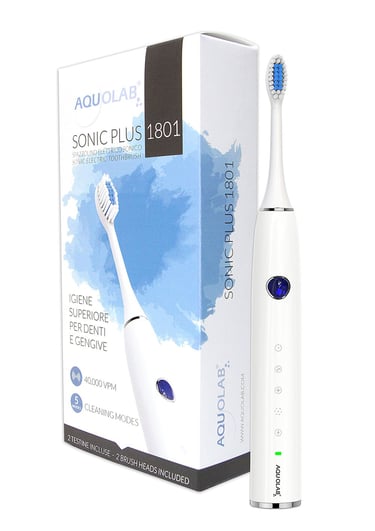
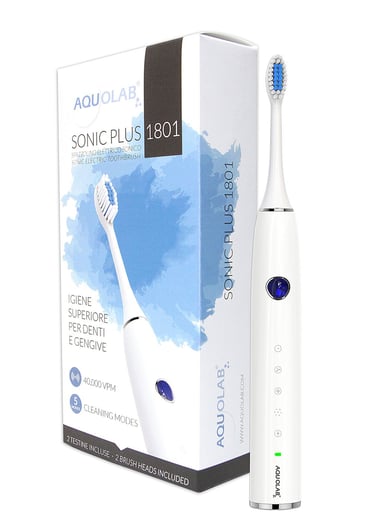
Synergistic micro-hydroxyapatite toothpaste with a sonic toothbrush
Combining a toothpaste containing micro-hydroxyapatite with a sonic toothbrush significantly optimizes brushing effectiveness. Sonic vibrations promote better diffusion of the hydroxyapatite microparticles onto the enamel and into hard-to-reach areas, thus enhancing remineralization and protecting teeth. This synergy also improves plaque removal while remaining gentle on the gums. It helps reduce tooth sensitivity, prevent cavities, and maintain more complete daily oral hygiene. According to the French Union for Oral Health (UFSBD ), electric toothbrushes improve plaque removal and promote better oral hygiene.
Conclusion
Hydroxyapatite marks a turning point in oral hygiene. However, it is essential to distinguish between the naturally derived, safe, and biomimetic micro version and the synthetic nano version, whose safety remains debated.
Combined with ozonated oil, microhydroxyapatite offers a complete solution: it remineralizes, protects, cleanses, and soothes.
Toothpastes based on this synergy, such as Aquolab's Ozonic, represent a truly modern and natural alternative to fluoride toothpastes, suitable for the whole family and respectful of health.
By choosing this new generation of dental care, you are opting for a healthy, protected and radiant mouth while avoiding the risks associated with fluoride and nanoparticles.
Continue reading...
© 2024. All rights reserved.