hygiene-precision: distributor of Aquolab products


Ultrasonic scaling
Discover how ultrasonic scaling deeply cleans your teeth and how to prevent tartar with ozone therapy to space out dental care.
This article was written by the Hygiène Précision team, based on scientific data and rigorous clinical studies. Updated on 29/09/2026
3/2/20266 min read


Ultrasonic scaling is a modern, effective technique used by dentists to remove plaque and tartar buildup from teeth. This tartar, also known as dental calculus, results from the mineralization of bacterial plaque. If not removed regularly, it can lead to serious oral health issues such as gingivitis, periodontitis, or chronic bad breath.
In this article:
Ultrasonic scaling meaning
Unlike manual scaling, ultrasonic scaling relies on an ultrasonic device. This device generates high-frequency vibrations capable of breaking up tartar deposits without damaging tooth enamel. A continuous stream of water is also sprayed to flush away debris and cool the treated area.
This method is fast, virtually painless, and particularly effective, even for patients with heavy deposits or hard-to-reach areas.
Subgingival tartar removal and periodontal pocket treatment
One of the major advantages of ultrasonic scaling is its ability to treat not only the visible tooth surface, but also the areas beneath the gumline. When bacterial plaque accumulates, it can turn into subgingival calculus that is especially difficult to reach with standard brushing, fostering the development of periodontal pockets (spaces formed when the gums pull away from the teeth).
Thanks to the fine metallic tips (inserts) and the hydrodynamic action of the water spray (the cavitation effect), the ultrasonic device effectively disrupts deep-seated tartar deposits. This subgingival cleaning is crucial for halting the progression from gingivitis to periodontitis, relieving gum inflammation, and ensuring the long-term stability of tooth support.
Hand scaling vs ultrasonic scaling
Although ultrasonic technology is now standard practice in most dental clinics, manual scaling with a curette remains an essential and widely used technique. Unlike the vibrating tip of an ultrasonic scaler, a periodontal curette is a slender, curved metal hand instrument that the dentist uses to meticulously scrape the tooth surface and detach calcified plaque.
So, ultrasonic or curette? In reality, these two methods are not mutually exclusive, they are complementary. Ultrasonic scaling excels at rapidly removing large deposits of supragingival tartar (above the gumline) through the combined action of micro-vibrations and water spray. It is fast, efficient, and generally very comfortable.
However, the manual curette provides the practitioner with irreplaceable tactile sensitivity. In fact, it is almost systematically used at the end of the session to perform finishing touches, smooth root surfaces (root planing), and dislodge subgingival calculus hidden below the gumline with pinpoint accuracy.
Key steps of an ultrasonic scaling appointment
An ultrasonic scaling appointment typically involves three phases:
Initial assessment: The dentist examines the condition of your teeth and gums to identify the areas most affected by tartar buildup.
Ultrasonic scaling: Using a vibrating metal tip, the practitioner moves over each tooth to break down and remove the tartar.
Polishing and finishing: After scaling, the teeth are polished with a specialized prophy paste to create a smooth surface, preventing plaque from quickly adhering again.
Ultrasonic scaling benefits
Periodontal disease prevention: Removing tartar helps prevent chronic inflammation such as gingivitis and periodontal diseases.
Improved oral hygiene: Clean, smooth teeth make daily brushing significantly more effective.
Fresher breath: Fewer bacteria mean fewer unpleasant odors.
Enhanced smile aesthetics: Clean, bright teeth improve the overall appearance of your smile.
Ultrasonic scaling not recommanded for:
Although ultrasonic scaling is the most common and safest method used in dental offices today, certain situations require specific precautions, air polishing, or a manual approach using curettes. Here are the main cases to keep in mind:
Pacemakers: This is a common concern among patients. In the past, electromagnetic emissions from older ultrasonic scalers were discouraged due to the risk of interfering with pacemakers. Today, most modern pacemakers and recent dental devices are fully shielded and compatible. However, it remains essential to inform your dentist that you have a pacemaker before treatment begins. They can verify equipment compatibility or opt for manual scaling as a precaution.
Severe dentin hypersensitivity: If you experience acute sensitivity to cold or touch (often linked to receding gums and exposed root surfaces), the vibrations of the tip and the constant stream of water can trigger sharp discomfort. Your dentist can adjust the power output or treat hypersensitive zones manually.
Enamel demineralization: Areas with pronounced demineralization (often visible as chalky white spots, early signs of caries) are porous and fragile. The mechanical vibration of ultrasonic tips is generally avoided on these localized areas to prevent chipping or damaging the compromised enamel.
Severely compromised teeth: In the presence of significant tooth fractures, unstable restorations or crowns, or severe tooth mobility, the vibrational force can be too aggressive. The practitioner will evaluate each tooth individually to tailor their technique.
Given these considerations, maintaining preventive oral hygiene at home becomes even more vital to curb plaque formation and extend the intervals between professional appointments.
Ultrasonic scaler for home use
An ultrasonic scaler is a professional dental instrument, and using ultrasonic scaler on yourself at home is not advisable. In fact, commercially available ultrasonic scalers sold directly to consumers are dangerous, as improper handling poses a serious risk of irreversibly damaging tooth enamel and injuring gum tissue. For these reasons, ultrasonic scaling must strictly be performed by a qualified dental professional. In normal care, tartar and plaque buildup are best managed by a dentist or dental hygienist, who can assess whether scaling is clinically needed, choose the right technique, and perform the treatment safely as part of a personalized oral-care plan. For deeper cleaning needs, dental professionals can also provide treatment in a controlled setting, including local anaesthetic when appropriate, which is another reason this care is far better done in the dental office than at home."
What to do after ultrasonic scaling at dentist?
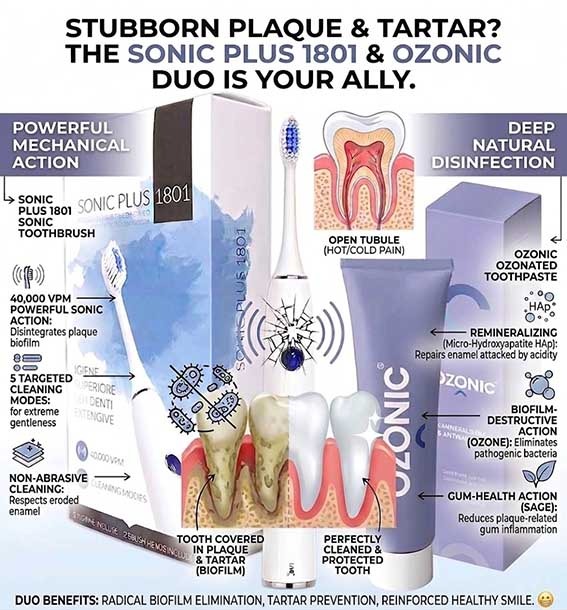
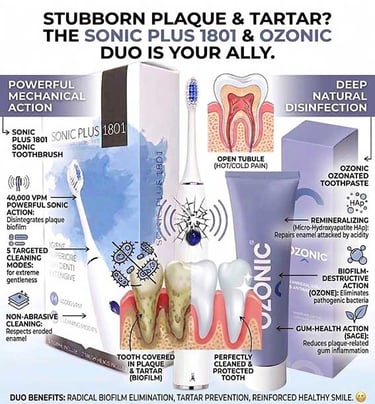
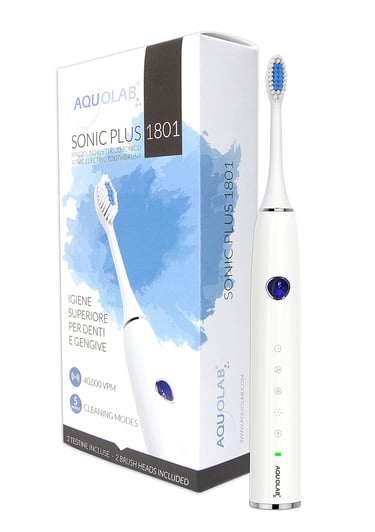
Following a deep cleaning teeth session, a few simple precautions help protect your teeth and gums. For the first 24 to 48 hours, avoid very hot, acidic, or staining foods and beverages (such as coffee, tea, and red wine), as enamel and gingival tissues may be temporarily sensitive. Gentle oral hygiene is also crucial: use a soft-bristled or sonic toothbrush, a non-abrasive and antimicrobial toothpaste (such as ozonated toothpaste), and avoid brushing too aggressively. If sensitivity or bleeding persists, schedule a follow-up visit with your dentist.
Post-ultrasonic scaling care to prevent tartar
To extend the time between scaling appointments, effective daily preventive measures can make a major difference. Among them, active ozone stands out for its antibacterial and remineralizing properties. Used daily, ozone helps prevent dental plaque from mineralizing into hard tartar.
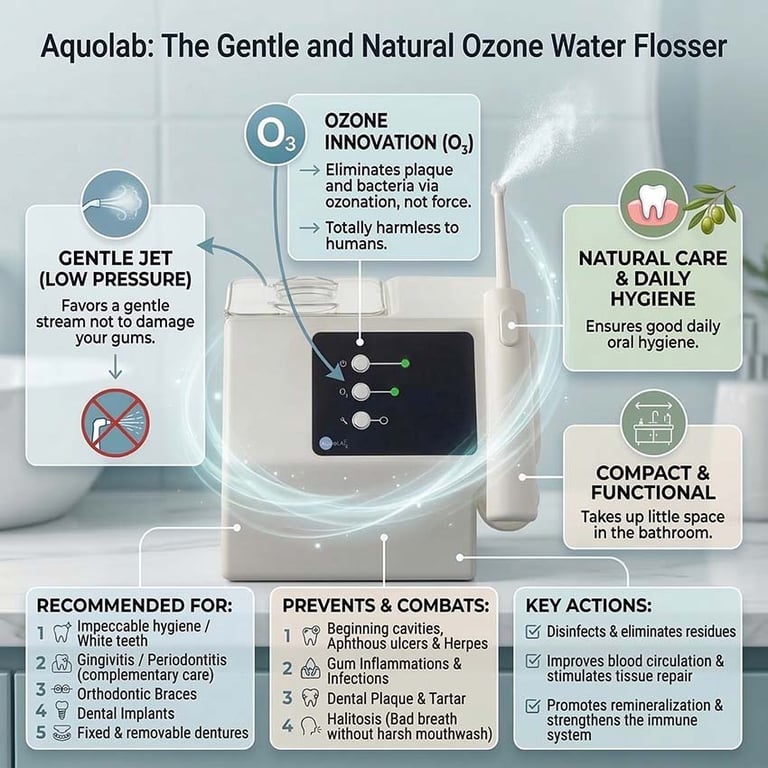
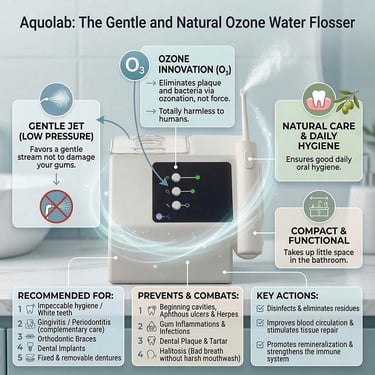
Preventing tartar buildup with ozone: the aquolab water flosser
The Aquolab oral irrigator uses active ozone to deliver a deep daily clean. This water flosser sanitizes interdental spaces, destroys plaque-causing bacteria, and prevents tartar formation. Its gentle action makes it well-suited for sensitive gums.
Multiple studies show that ozone, used in the form of ozonated water, as in the Aquolab oral irrigator, exhibits oxidative activity capable of disrupting bacterial cell membranes and increasing permeability. This mechanism leads to a significant reduction in plaque and destabilizes the bacterial biofilm, the complex structure responsible for tooth decay and periodontal diseases. Research has also shown that ozone disrupts bacterial adhesion and alters the salivary biomolecules involved in biofilm formation, effectively curbing its development. In periodontics, several systematic reviews and a study conducted with Aquolab demonstrate that ozone, when used as an adjunct to scaling and root planing, helps reduce gingival inflammation, bacterial load, and plaque formation. (Antimicrobial effects of ozonated water on S. mutans biofilms; Aquolab® ozone-therapy is an efficient adjuvant in the treatment of chronic periodontitis: A case-control study)
Ozone therapy to reduce ultrasonic scaling frequency: a natural alternative
Dental ozone therapy is an innovative procedure gaining traction in dental practices. It involves applying medical-grade ozone in gaseous or liquid form to:
Eliminate pathogenic bacteria responsible for tartar and cavities,
Strengthen natural oral defenses,
Reduce the required frequency of scaling appointments.
It is a gentle, natural approach free of known side effects, suitable for both adults and children.
Conclusion: combining ultrasonic scaling and ozone prevention for a healthy mouth
Ultrasonic scaling is an essential procedure for maintaining healthy, clean, and radiant teeth. To maximize its benefits and space out professional cleanings, the regular use of active ozone (via an oral irrigator or in-office ozone therapy) helps stop tartar formation at its source.
👉 Visit your dentist regularly and establish an enhanced preventive routine to protect your smile for the long term!
Continue reading...
© 2024. All rights reserved.