hygiene-precision: distributor of Aquolab products





Oral bacterial infection
An untreated oral bacterial infection can cause pain, tooth loss and serious complications. Discover its consequences and how to avoid it effectively. discover our ozone care
This article was written by the Hygiène Précision team, based on scientific data and rigorous clinical studies. Updated on 21/08/2026
5/6/20268 min read
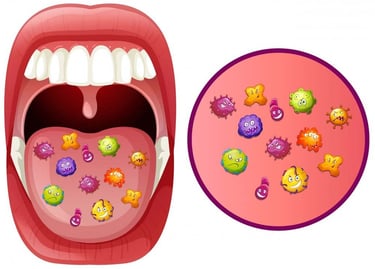
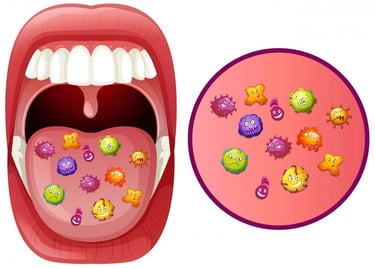
An untreated oral bacterial infection or mouth inflammation may appear harmless at first, but it can rapidly progress and lead to painful and sometimes serious complications. Whether it starts as an infected tooth, inflamed gums, or a sore on the tongue, delaying treatment allows bacteria to multiply and spread to surrounding tissues or, in rare cases, to other parts of the body.
Recognizing the early signs of an oral infection and seeking prompt dental care are essential to protect both your oral and overall health. In this guide, you'll learn about the symptoms, risks, treatment options, and the importance of proper oral hygiene to prevent bacterial infections.
This article contains the following :
Signs of bacterial infection in mouth
Recognizing the early signs of a bacterial infection allows treatment to begin before complications occur.
Common symptoms include:
Persistent toothache or throbbing pain.
Swollen, red, or bleeding gums.
White or yellow pus around a tooth or gum.
Bad breath that does not improve after brushing.
A bad taste in the mouth.
Swelling of the cheek or jaw.
Difficulty chewing or swallowing.
Loose teeth.
Fever and swollen lymph nodes in more advanced infections.
If facial swelling, difficulty breathing, or difficulty swallowing develops, emergency medical care should be sought immediately, as these may indicate a rapidly spreading infection.
Different types of oral infections
Several bacterial infections can compromise the mouth, alveolar bone, and adjacent craniofacial structures if left unmanaged.
Dental Abscess
A dental abscess is a localized collection of pus resulting from bacterial invasion of the dental pulp (periapical abscess) or the surrounding periodontium (periodontal abscess). Bacteria typically penetrate via untreated deep caries, cracked teeth, or advanced periodontal pockets.
Clinical presentation: Severe, throbbing, continuous toothache that radiates to the jaw, ear, or neck; localized intraoral or facial edema; extreme sensitivity to percussion and temperature; halitosis; and systemic fever or malaise.
Complications: Pathogens can spread into deep fascial spaces of the head and neck (e.g., Ludwig’s angina) or enter the bloodstream, causing systemic sepsis.
Management: Immediate drainage, endodontic therapy (root canal) to eliminate pulpal infection, or tooth extraction in non-restorable cases, supported by adjunctive antibiotics when systemic symptoms appear.
Gingivitis
Gingivitis is a reversible inflammatory condition localized to the marginal gingiva, triggered by the accumulation of polymicrobial biofilm (dental plaque) along the gingival margin.
Clinical presentation: Erythematous, edematous gingival margins that bleed easily during brushing, flossing, or probing, often accompanied by mild tenderness. The underlying bone and periodontal ligament remain intact.
Complications: Untreated gingivitis can transition into irreversible periodontitis as pathogenic anaerobic bacteria proliferate.
Management: Professional scaling and prophylaxis to remove supra- and subgingival calculus, reinforced with daily mechanical plaque control (brushing, interdental cleaning) and antimicrobial rinses (e.g., chlorhexidine) during acute flare-ups.
Periodontitis
Periodontitis is a chronic, irreversible infection that destroys the periodontal ligament, cementum, and alveolar bone. Pathogenic complexes such as Porphyromonas gingivalis and Tannerella forsythia trigger a dysregulated host immune response that degrades the tooth-supporting apparatus.
Clinical presentation: Deep periodontal pocket formation, gingival recession, suppuration, increasing tooth mobility, drifting, and spontaneous bleeding.
Complications: Progressive alveolar bone loss leading to tooth loss, as well as systemic low-grade inflammation linked to cardiovascular disease, poorly controlled diabetes, and adverse pregnancy outcomes.
Management: Non-surgical scaling and root planing (SRP), localized or systemic antimicrobials, periodontal flap surgery or bone grafting in advanced defects, and strict long-term periodontal maintenance.
Dental-origin sinus infection (odontogenic sinusitis)
Odontogenic sinusitis (ODS) occurs when an infection from the roots of maxillary premolars or molars perforates the thin maxillary sinus floor (Schneiderian membrane). It accounts for roughly 10% to 40% of all maxillary sinusitis cases.
Clinical presentation: Unilateral facial pressure or pain over the maxillary sinus, unilateral foul-smelling purulent nasal discharge (rhinorrhea), nasal obstruction, and ipsilateral upper tooth ache.
Complications: Chronic refractory sinusitis, orbital cellulitis, or intracranial extension if the sinus barrier fails completely.
Management: Resolution requires treating the odontogenic source (endodontic retreatment, apical surgery, or extraction) alongside sinus drainage, nasal corticosteroids, and culture-directed antibiotic regimens.
Tongue infections (glossitis and abscesses)
Infections of the tongue can arise from direct bacterial invasion following trauma (e.g., bites, piercings, dental appliances), secondary infection of ulcerative lesions, or systemic immunosuppression and nutritional deficiencies (such as iron or vitamin B12 deficiency).
Clinical presentation: Significant tongue enlargement (macroglossia), severe localized pain, localized warmth, marked erythema, loss of lingual papillae (depapillation), and functional impairment affecting speech, mastication, and deglutition.
Complications: Acute swelling or lingual abscess formation can rapidly compress the oropharynx, creating an acute airway emergency.
Management: Targeted antimicrobial therapy, surgical incision and drainage for localized abscesses, removal of irritating hardware, and airway monitoring in severe, rapidly progressing cases.
Bacterial infection in mouth treatment
Successful bacterial infection in mouth treatment depends on eliminating both the bacteria and the source of infection.
Treatment may include:
Professional dental care
A dentist may:
Drain a dental abscess.
Perform root canal treatment.
Remove severely damaged teeth.
Deep clean infected gums.
Prescribe antibiotics when appropriate.
Good oral hygiene
Maintaining excellent oral hygiene helps reduce bacterial growth. Mechanical biofilm disruption, combined with targeted antimicrobial and remineralizing technologies, is the most effective approach to preventing oral pathologies (such as gingivitis, periodontitis, and abscesses). Incorporating high-performance tools and active biomaterials into a daily routine allows for deep decontamination of areas inaccessible to conventional cleaning.
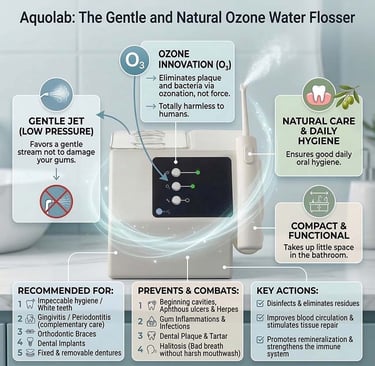
Aquolab water flosser
The Aquolab water flosser combines a controlled, gentle water jet with active ozone generation to deliver both mechanical flushing and natural chemical disinfection.
Targeted antibacterial action: Ozone acts as a powerful broad-spectrum antimicrobial agent, eliminating pathogenic anaerobic bacteria hidden in periodontal pockets, interdental spaces, and beneath bridges or orthodontic appliances.
Tissue healing and inflammation control: The oxygenating properties of ozonated water stimulate local microcirculation, accelerate mucosal healing, reduce gingival bleeding, and calm inflammation without damaging delicate soft tissues.
Prevention of biofilm accumulation: Operates at low pressure while effectively preventing tartar buildup and reducing halitosis-causing volatile sulfur compounds naturally, eliminating the need for aggressive chemical mouthwashes.
Aquolab Sonic toothbrush
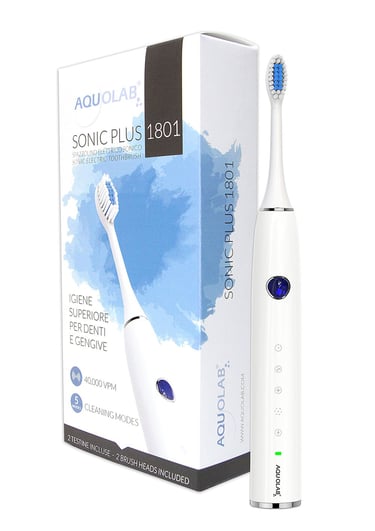
The Aquolab Sonic toothbrush uses high-frequency magnetic levitation technology producing up to 40,000 vibrations per minute (VPM) to maximize biofilm removal.
Hydrodynamic dynamic cleaning: High-frequency sonic waves generate microbubbles from water and toothpaste that penetrate deep into the interproximal spaces and beneath the gingival margin, dislodging pathogenic bacterial colonies that manual bristles miss.
Customized gum protection: Equipped with soft, rounded bristles and 5 tailored modes (Clean, Sensitive, Gum Care, White, Polish) to thoroughly decontaminate oral surfaces while preventing mechanical abrasion of inflamed gingival tissues.
Optimized brushing compliance: Features an integrated 2-minute timer with a 30-second Quadpacer alert to ensure uniform quadrant-by-quadrant cleaning, supported by an extended 12-week battery life.
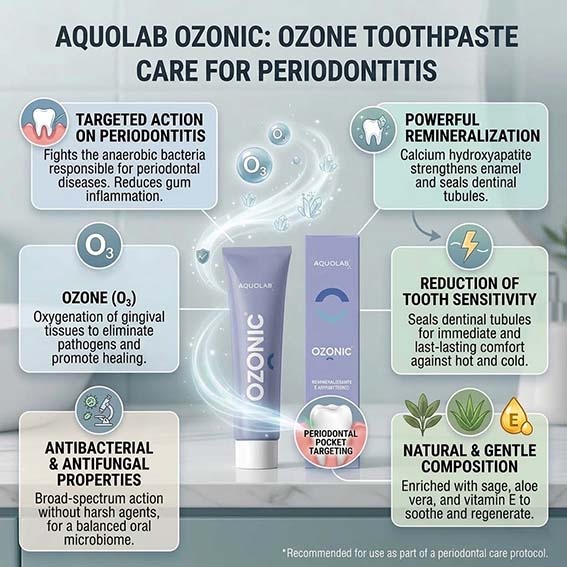
Ozonic toothpaste
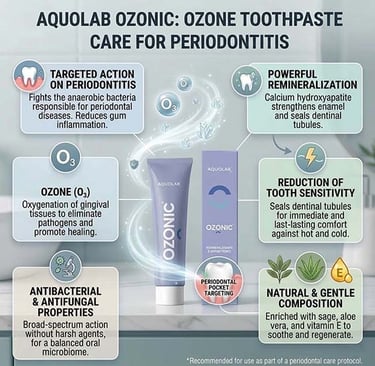
The Ozonic professional toothpaste is formulated without foaming agents to deliver an active synergy of ozonated olive oil, micro-hydroxyapatite, and natural sage extract.
Ozonated olive oil: Delivers sustained antibacterial and anti-inflammatory properties directly to infected or irritated gum margins, inhibiting biofilm formation and soothing gingival flare-ups.
Micro-hydroxyapatite (HAp): Chemically identical to natural enamel and dentin minerals, it seals exposed dentinal tubules, repairs enamel micro-fissures, and neutralizes hypersensitivity while creating a smoother surface less prone to bacterial adhesion.
Sage extract (Salvia officinalis): Provides natural astringent and antimicrobial properties that disrupt bacterial biofilms, combat bad breath, and promote overall gingival health.
Healthy lifestyle habits
Reducing sugar intake, avoiding tobacco, staying hydrated, and eating a balanced diet all contribute to better oral health and faster healing.
Regular dental check-ups
Routine examinations every six months allow early detection of cavities, gum disease, and other conditions before they develop into serious infections.



Oral bacterial infection antibiotics
Antibiotics are sometimes necessary to treat bacterial infections in the mouth, but they are not always the first-line treatment.
A dentist may prescribe antibiotics when:
The infection has spread beyond the tooth or gums.
There is significant facial swelling.
Fever or systemic symptoms are present.
The patient's immune system is weakened.
Drainage or immediate dental treatment is not sufficient.
Commonly prescribed antibiotics include:
Amoxicillin.
Amoxicillin-clavulanate.
Metronidazole (often combined with amoxicillin).
Clindamycin for patients allergic to penicillin.
It is important to complete the entire antibiotic course exactly as prescribed, even if symptoms improve. Antibiotics alone usually do not eliminate the source of infection, which often requires dental treatment such as drainage, root canal therapy, or tooth extraction.
Why is an untreated oral infection dangerous?
The mouth naturally contains hundreds of species of bacteria. Under normal conditions, they coexist without causing harm. However, when bacteria enter damaged tissues through a cavity, gum disease, or oral injury, they can multiply rapidly and trigger an infection.
Without appropriate treatment, a bacterial infection in the mouth may result in:
Persistent tooth or gum pain.
Swollen gums, cheeks, or jaw.
Irreversible damage to teeth and supporting tissues.
Spread of infection to nearby tissues or, in rare cases, the bloodstream.
Serious complications affecting the heart, kidneys, or joints in susceptible individuals.
Early diagnosis and treatment greatly reduce the risk of these complications.
The 6 main consequences of an untreated oral infection
An untreated oral infection rarely remains confined to the mouth. Over time, bacteria can multiply and spread, turning a manageable dental issue into a severe, multi-stage health risk. Below are the 6 major consequences of leaving an oral infection unchecked:
Severe, Throbbing Pain
Bacterial infections typically generate intense, radiating pain that disrupts eating, sleeping, and daily activities. Without intervention, this discomfort progressively worsens.
Tissue Damage and Tooth Loss
As the infection spreads, it destroys the alveolar bone and periodontal ligament anchoring the teeth. This causes tooth mobility, irreversible damage, and often necessitates tooth extraction.
Facial Swelling and Functional Impairment
Localized abscesses can cause visible facial swelling, gum recession, foul breath (halitosis), and draining fistulas. These symptoms hinder basic functions like chewing and speaking while taking a toll on self-esteem.
Regional Spread (Abscesses & Deep Neck Infections)
Bacteria can migrate from the tooth root into surrounding deep fascial spaces, leading to extensive dental abscesses, facial cellulitis, maxillary sinusitis, or life-threatening conditions like Ludwig's angina.
Systemic Warning Signs (Fever & Malaise)
When the immune system is overwhelmed, the infection triggers full-body symptoms, including fever, chills, swollen lymph nodes (lymphadenopathy), and general fatigue.
Life-Threatening Systemic Complications
If oral bacteria enter the bloodstream (bacteremia), they can travel to distant organs. This raises the risk of severe complications—such as infective endocarditis, sepsis, prosthetic joint infections, or brain abscesses—especially in immunocompromised patients.
Oral infection in children
Oral infections in children are common and may be caused by bacteria, viruses, teething complications, or poor oral hygiene. Symptoms such as mouth sores, swollen gums, tooth pain, fever, or difficulty eating should not be ignored.
Early treatment helps relieve discomfort, prevents complications, and reduces the risk of recurrent infections while promoting healthy oral development.
Natural support for oral health
While natural remedies cannot replace professional dental treatment for bacterial infections, they may help support oral hygiene alongside appropriate care.
Helpful measures include:
Brushing and flossing consistently.
Drinking plenty of water.
Eating a balanced diet rich in vitamins.
Limiting sugary foods and acidic beverages.
Using ozone water oral hygiene devices as part of a daily oral care routine.
Natural remedies should never replace professional treatment if an abscess, fever, or significant swelling is present.
Conclusion
An untreated bacterial infection in the mouth can progress from mild discomfort to severe pain, tooth loss, and potentially serious health complications. Recognizing the early signs, maintaining excellent oral hygiene, and seeking prompt dental treatment are the most effective ways to protect your oral and overall health.
For enhanced daily oral hygiene, the Aquolab ozone-based oral care range helps support cleaner teeth, healthier gums, and a healthier oral environment while complementing your regular dental care routine.






Continue reading...
© 2024. All rights reserved.