hygiene-precision: distributor of Aquolab products




How to choose the right water flosser
Discover the benefits of a water flosser for your gums. Complete guide: usage, selection, and exclusive advantages of ozone technology.
This article was written by the Hygiène Précision team, based on scientific data and rigorous clinical studies. Updated on 01/09/2026
5/6/202611 min read
Everything you need to know about water flossers: An Expert Guide
Oral hygiene doesn't stop at brushing. Even with a rigorous brushing technique, the toothbrush primarily acts on the visible surfaces, leaving some complex areas inaccessible without disinfection. This is where the water flosser (or oral irrigator) comes in. It helps to disrupt plaque in areas difficult to reach with brushing.
However, given the proliferation of models on the market, some clarification is necessary. While a water flosser is an essential tool for achieving healthy gums, its use and selection, particularly the decisive advantage of ozone technology, require expert guidance.
In recent years, certain technological developments have further enhanced the effectiveness of these devices, notably the appearance of dental jets incorporating ozone, an interesting advance for people seeking more thorough oral hygiene.
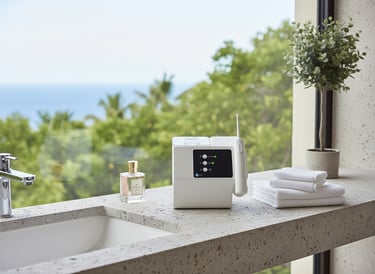
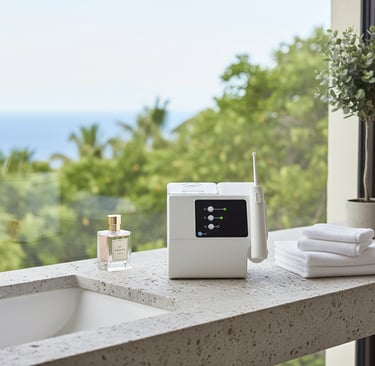
What is a water flosser | dental flosser?
A water flosser or dental flosser is an oral hygiene device that projects a jet of pressurized water, sometimes pulsed, to clean between teeth and along the gum line.
The UFSBD (French Union for Oral Health) recommends using a water flosser as a complement to brushing to improve oral hygiene, particularly for people with gum problems or braces.
Unlike a toothbrush, which primarily cleans visible surfaces, a water flosser allows you to:
Clean the interdental spaces
Dislodge food debris stuck between teeth
Reduce the accumulation of dental plaque
Clean gently under the gum
Stimulate the gingival tissues
It is particularly appreciated for its ease of use and its effectiveness in areas where dental floss can be difficult to handle.
How does a water flosser work?
A water flosser relies on a simple yet highly effective mechanism: using a controlled, pulsating stream of water to flush away plaque and debris from hard-to-reach areas. Here is a closer look at how it works and adapts to your daily oral care routine.
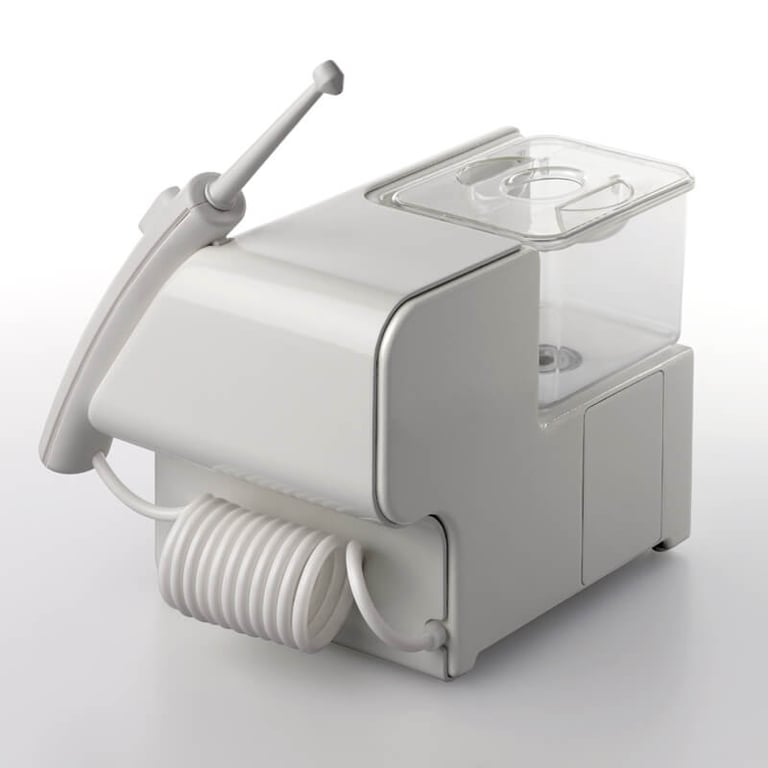
The operation of a water flosser is relatively simple:
A tank is filled with water (usually lukewarm)
An internal pump generates controlled pressure
Water is projected through a thin nozzle, directed towards the interdental spaces and the gum line.
Depending on the model, the pressure can be adjusted to suit:
For sensitive gums
To orthodontic appliances
To dental implants or prostheses
Some newer devices go further by enriching the projected water with complementary technologies, such as ozone, in order to optimize the sanitation of the oral cavity.
Why use a dental flosser daily?
Brushing alone misses the tight spaces where food particles and plaque accumulate. Integrating a water flosser into your everyday routine elevates your oral hygiene in three key ways:
A deeper clean than a toothbrush
Even with rigorous brushing technique, some areas remain difficult to reach. A water flosser allows you to clean where your toothbrush can't, thus reducing residual plaque.
Improving gum health
The action of the water jet:
Massage the gums
Stimulates blood circulation
Helps reduce inflammation and bleeding
Regular use helps prevent gingivitis and maintain healthier gums in the long term.
A lasting feeling of freshness
By eliminating the bacteria responsible for volatile sulfur compounds, the water jet contributes to fresher breath, far beyond the temporary effect of a simple mouthwash.
Which water flosser to choose: classic or new technological evolution
While the traditional water jet is already effective, some innovations have made it possible to further improve its performance.
The classic water flosser: be careful with the pressure
It's a common misconception that the more powerful the water jet, the better the cleaning. This is a widespread error. In reality, the vast majority of conventional water flossers on the market use far too much mechanical pressure. Designed as miniature "high-pressure cleaners" for the mouth, these traditional water flossers damage gums more than they heal them.
Daily use of a high-pressure water jet on sensitive tissues has harmful consequences:
Gingival micro-lesions: The force of the jet damages the mucous membrane, causing regular pain and bleeding of the gums instead of soothing them.
Gum recession: In the long term, excessive pressure pushes back the gum, exposing the root of the tooth and increasing tooth sensitivity.
The opposite effect on bacteria: Even worse, a jet that is too powerful risks pushing dental plaque and bacteria even deeper under the gum, directly into the periodontal pockets, thus increasing the risk of infection.
Your mouth doesn't need forceful cleaning, but intelligent cleaning. It is therefore essential to avoid devices with harsh mechanical propulsion and to favor technologies that respect the fragility of your periodontium (all the tissues supporting the teeth).
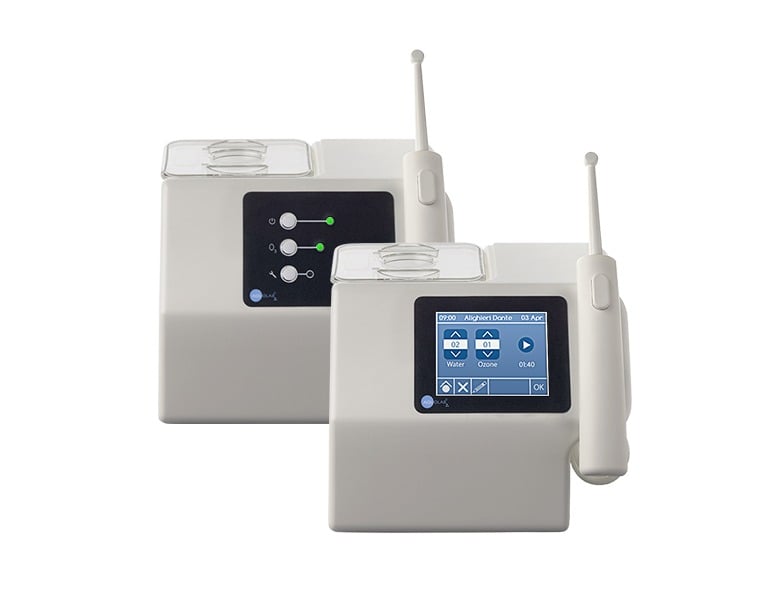
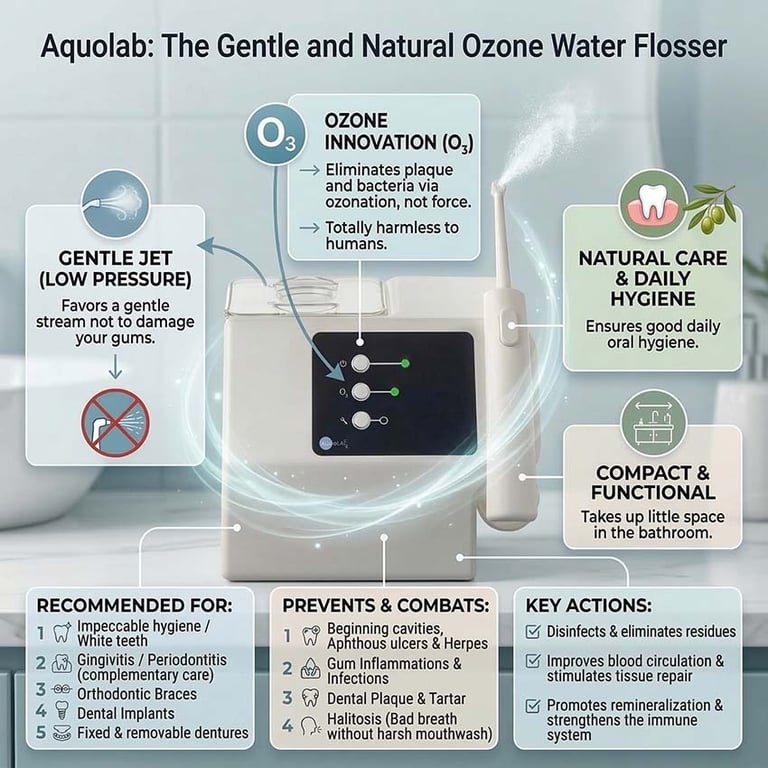
👉 That's why we developed Aquolab: a water flosser that uses the purifying power of ozonated water at very low pressure to eliminate bacteria without ever harming your gums.
The innovation of the ozone dental jet (Aquolab)
The use of ozone in oral hygiene via a water flosser is innovative, natural, and effective against tartar and cavities.
Ozone (O₃) is recognized in dentistry for its powerful natural antimicrobial properties. Its use in oral hygiene (toothpastes, water flossers, gels) is generating increasing interest, particularly for combating dental plaque and periodontal disease.
Ozone (gaseous or aqueous) has demonstrated an ability to disrupt dental bacterial biofilms.
👉 Reference: Huth et al., 2006 ( Journal of Periodontology ) PubMed
Dentist-recommended water flosser: the premium Aquolab water flosser
Over 350 dental surgeons have chosen Aquolab !
The Aquolab ozone dental jet allows:
Adding a natural antibacterial agent to the water
To limit bacterial growth and dental plaque
To contribute to the remineralization of enamel and the healing of gums
To eliminate bleeding gums
To strengthen the immune system by contributing to better oxygenation of the gums
To prevent tooth decay
To prevent and treat periodontal diseases such as gingivitis and periodontitis
This technology is becoming increasingly widespread and is attracting growing interest from users concerned with optimizing their hygiene routine and oral health. Ozone-based natural treatments are recommended by oral health professionals.
A water jet that doesn't just clean teeth and gums, it cares for them: the Aquolab water flosser
Clinical studies demonstrating the effectiveness of the Aquolab water flosser on oral health
Clinical studies are converging to demonstrate the significant benefits of ozonated water flossers (Aquolab) as a complement to or alternative to conventional oral hygiene. As early as 2015, research published in the Journal of Oral Sciences showed that a single application significantly reduced periodontal bacteria without side effects. Several clinical cases subsequently confirmed a rapid and powerful antimicrobial action, particularly against Candida, with visible results within a few days and better tolerability than antifungal treatments ( PDF , ResearchGate ).
In periodontology and orthodontics, ozone irrigation outperforms chlorhexidine in reducing plaque, bleeding, and inflammation, while avoiding adverse effects (staining, taste alteration) ( PubMed ). Other studies also highlight its role in wound healing, reducing oxidative stress in diabetics ( PDF ), and preventing peri-implant infections ( MDPI ).
Finally, ozonated water acts as an antimicrobial, anti-inflammatory, and biostimulant agent, improving overall tissue health without toxicity or bacterial resistance ( Dental Tribune ). It thus appears as an effective, safe, and innovative solution for daily oral hygiene.


For whom is a water flosser essential?
The water flosser is suitable for a wide range of users, but it is particularly useful for:
✔ People prone to tartar and cavities
The ozone dental irrigator effectively reduces plaque, which causes tartar buildup, by oxygenating and disinfecting hard-to-reach areas around teeth and implants. Its antimicrobial action also helps limit cariogenic bacteria, thus contributing to the prevention of cavities and gum inflammation.
✔ Wearers of orthodontic appliances
It makes cleaning around rings and wires easier, which are often difficult to maintain with a regular brush.
✔ People with implants, crowns or bridges
It allows for the effective cleaning of sensitive areas without risking damage to the prostheses.
✔ People with sensitive gums
Less aggressive than dental floss, the water jet is often better tolerated.
✔ People prone to bad breath
By addressing the root cause of the problem, it contributes to longer-lasting fresh breath.
Water flosser for Family use
The Aquolab water flosser is suitable for the whole family and helps improve daily oral hygiene. Thanks to its various nozzles and pressure settings, it adapts to everyone's needs: adults, children, seniors, and those with braces or implants. It effectively complements brushing by removing food particles and plaque, and provides care for teeth and gums. It disinfects, promotes healing, and strengthens the immune system.
How to use a water flosser properly?
Adding a water flosser to your daily routine is one of the most effective ways to boost gum health and clear plaque. To get the most out of your device without splashing your bathroom mirror, follow these essential steps and timing recommendations.
Should I use it before or after brushing?
For an optimal routine, use a water flosser before brushing. This helps to remove debris and allows the toothpaste to work more effectively. Then, brushing with a suitable toothpaste (and using interdental brushes) will be much more efficient, as the active ingredients will penetrate directly onto the exposed surfaces.
For ozone water jets, use the jet after brushing to complete the disinfection process. There is no risk of negating the benefits of toothpaste because the ozone disinfects both tooth and gum surfaces. Interdental spaces are more effectively disinfected thanks to ozone's natural ability to disrupt bacterial biofilm and destroy bacteria.
Our anti-splash tutorial
Many users abandon their devices for fear of splashes in their bathroom. Here's the professional technique:
Fill the reservoir with lukewarm water (especially in the case of sensitive collars).
Activate the ozone function if your water flosser has this feature.
Adjust to a gentle pressure (if using ozone, it is the ozone that does the work, not the force of the water).
Lean well over your sink.
Place the nozzle in your mouth and direct the jet at 90° along the gum line.
Keep your lips slightly parted: That's the secret! Let the water flow naturally into the basin without closing your mouth. Rinse along your gum line, pausing briefly between each tooth.
Clean each interdental space methodically
⏱️ Average duration : 1 to 2 minutes per use
Daily use, ideally in the evening, will give the best results.
Dangers and contraindications of the water flosser
While oral irrigators are widely praised for daily dental hygiene, improper use or an unsuitable device can turn a beneficial routine into a risk for your oral health. Understanding the potential hazards and contraindications is essential to protect delicate tissues while ensuring effective plaque removal.
Powerful water flosser: be careful with your gums
A water jet used with excessive water pressure or an overly aggressive pulsed mode can damage gums, cause repeated bleeding, and lead to gum recession. In the long term, this weakens the supporting tissues of the teeth and increases the risk of inflammation and gum recession. A gentle, continuous jet is preferable and causes no damage to your gums or teeth. That's why Aquolab developed the Aquolab water jet with gentle, constant pressure. The addition of ozone to the water provides superior oral disinfection at lower pressures. The Aquolab water jet is more effective and, above all, gentler on the gums than conventional water jets.
Powerful water flosser: not recommended for people with periodontitis or gingivitis
For people with severe periodontitis or very sensitive gums, improper use of a water flosser can worsen gum damage. Opt for a pressure-controlled model with added ozone.
Water jet and poor maintenance of the device
Maintaining good hygiene of the device is very important, as a poorly cleaned reservoir can promote bacterial growth. Ozone models provide a disinfected and sanitizing water jet.
Water flosser or dental floss: which solution to choose?
Flossing is often considered tedious. A water flosser (dental jet) is emerging as an effective alternative or an essential complement for impeccable oral hygiene.
Unlike traditional threading, pressurized water jets reach inaccessible areas, particularly for those wearing orthodontic braces or bridges. Their advantages are numerous:
Injury prevention: Unlike floss which can cause micro-cuts, the water jet eliminates the risk of shearing the gums.
Ease of use: Ideal for people with limited dexterity or narrow interdental spaces.
Increased gentleness: It respects the sensitivity of your mouth while dislodging food residue.
Expert advice: Opt for a model offering a "gentle" mode and Ozone a disinfectant action to protect your gum tissues in the long term.
Water flossers vs. interdental brushes: the duel
While interdental brushes are effective, water flossers are gaining ground thanks to their exceptional gentleness. Where interdental brushes impose a sometimes aggressive mechanical friction, the water jet cleans by hydro-pressure without abrasive contact.
Why choose a water flosser over interdental brushes?
Reduced irritation: This is the ideal solution for sensitive, swollen, or inflamed gums. Without friction, the risk of bleeding is drastically reduced.
Gum massage: The water pressure stimulates blood circulation, promoting better gum health.
Biofilm removal: Using an ozone dental jet allows for deep disinfection. This advanced technology breaks down bacterial biofilm (dental plaque) without damaging the enamel.
In summary, the combined action of water and ozone offers superior disinfection, capable of neutralizing bacteria responsible for bad breath and cavities.
Oral irrigator gums bleeding
Using a water flosser can cause gums bleeding, especially in cases of inflammation or gingivitis. This is often due to improper technique or excessive pressure. By using it correctly, at a low intensity and regularly, gums become healthier and bleeding gradually decreases. Ozone water flossers promote gum healing and are highly recommended for those with gum disease.
Why do my gums bleed occasionally?
Bleeding gums are often associated with gum diseases such as gingivitis or periodontitis. However, they can also occur occasionally in people without any particular condition.
Several factors can explain bleeding gums.
Overly aggressive brushing:
Because gum tissue is fragile and highly vascularized, excessive pressure can cause small lesions and lead to bleeding during or after brushing.
Using dental floss:
Slight bleeding is common. The gums are sensitive to shearing.
The use of interdental brushes:
It is common to observe slight bleeding due to irritation from the interdental brushes.
Nutritional deficiencies:
A lack of vitamin C, vitamin K, iron or vitamin B12 can notably promote gum sensitivity and bleeding.
Certain medications or supplements:
Certain treatments or dietary supplements can thin the blood and slightly increase bleeding. This is particularly true of some anti-inflammatories, aspirin, anticoagulants, and supplements rich in omega-3 fatty acids.
Stress or fatigue:
Stress can impact the immune system. As a result, gums can become more sensitive and bleed more easily.
Local irritation:
Food stuck between the teeth, a small injury caused by hard food, or a minor irritation can also cause localized and temporary bleeding.
When to consult a doctor?
If bleeding becomes frequent, occurs spontaneously, or is accompanied by other symptoms such as red, swollen, or painful gums, it is recommended to consult a dentist to identify the cause and rule out gum disease.
The Aquolab water flosser: the solution for gums bleeding
The Aquolab ozone water jet has disinfectant and healing properties . Thanks to ozone, it helps eliminate bacteria and inflammation , and promotes the regeneration of gum tissue , thus helping to reduce bleeding and strengthen gum health .
Water flosser recommended by dentists: the Aquolab water flosser
With evolving habits and technologies, the water flosser has become an essential tool for oral hygiene and prevention. Some models now incorporate advanced features, such as water ozonation, to meet the needs of even the most demanding users.
Specialized brands, such as Aquolab, offer innovative and natural solutions suitable for everyone, illustrating this trend towards more comprehensive hygiene without altering simple daily routines. Clinical studies demonstrate the effectiveness of Aquolab treatments for gingivitis and periodontitis. Aquolab products help maintain optimal daily oral hygiene to prevent complications such as cavities, gingivitis, periodontitis, and tooth demineralization.
Water flosser effectiveness: the Aquolab dental flosser heals, soothes and disinfects
A water flosser is a valuable tool for improving oral hygiene, maintaining healthy gums, and preventing dental problems. Easy to use, comfortable, and effective, it fits seamlessly into a modern daily routine.
Recent developments, such as the Aquolab water flosser, incorporate ozone technology, paving the way for even more effective solutions while remaining easy to use. Regardless of whether you choose a basic or professional model, the key is consistent care and combining it with quality brushing.

Continue reading...
© 2024. All rights reserved.