hygiene-precision: distributor of Aquolab products




Best toothpaste for gingivitis | Guide and Expert Advice
Do you suffer from bleeding gums? Discover how to choose the best toothpaste for gingivitis. Learn about the effectiveness of ozone, hydroxyapatite, and natural remedies.
This article was written by the Hygiène Précision team, based on scientific data and rigorous clinical studies. Updated on 28/08/2026
5/6/20268 min read

Are your gums sending you distress signals redness, swelling, or bleeding every time you brush? While gingivitis is a common problem, it's not inevitable. It's primarily a sign that your current oral hygiene routine needs a refresh.
Faced with shelves saturated with marketing promises, finding the best toothpaste for gingivitis can quickly become a puzzle. Should you choose a powerful chemical treatment or a more gentle alternative for your oral health? Between the innovation of ozone, the soothing properties of sage, and the strength of hydroxyapatite, there are now sophisticated solutions to calm inflammation without harming your mouth.
In this guide, we examine the essential criteria for choosing an effective anti-gingivitis toothpaste that protects your gums while strengthening your enamel. Because a beautiful smile starts with healthy gums.
This article contains the following:
Best toothpaste for swollen gums : ozone toothpaste is for you
Choose a toothpaste without foaming agents (SLS) for sensitive gums
What are the essential ingredients of a toothpaste for gingivitis?
Gingivitis toothpaste: classic active ingredients vs. Aquolab OZONIC® toothpaste
Conclusion: For whom and why choose a gingivitis toothpaste with natural ozone?
Which toothpaste is good for gingivitis?
For gingivitis, it's essential to choose a toothpaste that treats inflammation, plaque, and protects oral tissues. Ideally, the formula should help soothe redness, reduce bleeding, decrease bacterial load, and promote enamel and gum repair. In addition to regular brushing and professional cleanings, the right toothpaste can be a valuable daily aid in managing gingivitis.
Why are ozonated toothpastes particularly interesting?
Ozonated toothpastes are particularly appealing because they combine antibacterial and remineralizing action with a gentler approach for sensitive gums. They are distinguished by the presence of natural ingredients such as ozonated vegetable oils, plant extracts, and hydroxyapatite, which can help reduce bacteria, support gum health, and repair enamel. They also offer a natural alternative to conventional toothpastes, especially those containing harsh foaming agents.
Toothpaste for gum disease
Qualities of a toothpaste for gingivitis:
When gums are irritated, a gingivitis toothpaste should ideally:
reduce the bacterial load around the gingival sulcus;
limit inflammation and bleeding;
promote enamelremineralization and gum resistance;
to be well tolerated (low risk of local irritation).
Modern formulations therefore seek to combine antibacterial properties, soothing effect and remineralizing ingredients while avoiding components known to irritate the oral mucosa.
Best toothpaste for swollen gums : ozone toothpaste is for you
The properties of ozone useful for oral care
Ozone (O₃) is a powerful oxidizing agent that, when applied in a controlled manner in a dental setting, exhibits antimicrobial effects against many oral bacteria and can help reduce inflammatory markers. Recent reviews and clinical studies indicate that ozone applications, as an adjunct to conventional care, have improved certain periodontal parameters (reduced bleeding, decreased pocket size, lower bacterial load). However, these results remain dependent on the quality of the protocols and the form of ozone used (gas, ozonated water, ozonated oils). SpringerLink
Ozone in toothpaste disrupts dental biofilm and soothes gums.
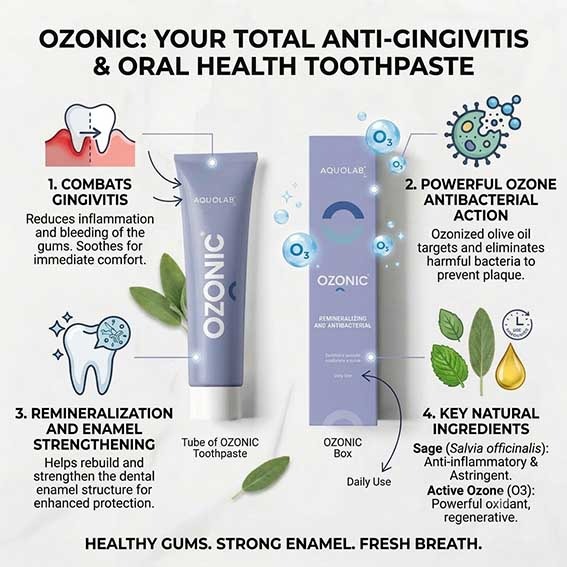
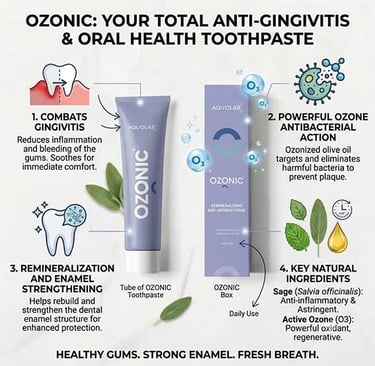
In toothpaste, ozone is stabilized and delivered in the form of ozonated oils (for example, ozonated olive oil) or ozonated water. The idea is to provide a local antimicrobial effect that disrupts and destroys the bacterial biofilm. It also supports healing without the need for harsh, permanent antiseptic agents. Some professional formulas, such as Aquolab's OZONIC, claim this ozone content for its gentle antibacterial and remineralizing action.
Best toothpaste for gingivitis and plaque
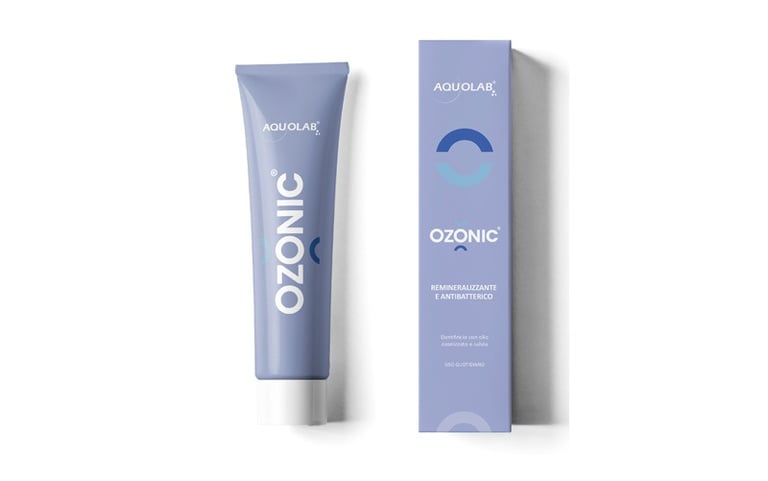
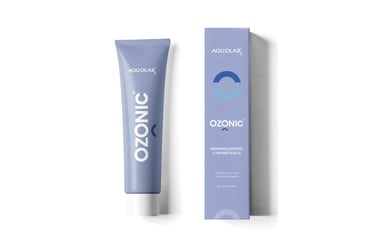
Ozonic is a professional toothpaste. Both professionals and users recognize Ozonic toothpaste as an excellent, well-tolerated ally that combines effective antibacterial and remineralizing care with a delicate feeling of freshness.
Best toothpaste for bleeding gums : OZONIC
This professional toothpaste with ozone, hydroxyapatite, and sage offers antibacterial, remineralizing, and anti-inflammatory action. It reduces sensitivity, heals gums, eliminates plaque responsible for gingivitis, and whitens teeth for optimal hygiene.
Dentist recommended toothpaste for gingivitis : Ozonic
Review from a professional and user:
" As a professional, I consider Ozonic toothpaste an excellent ally for daily oral hygiene: the presence of ozonated oil and hydroxyapatite provides a gentle antibacterial and remineralizing action. As a consumer, I appreciate its delicate feeling of freshness and its good tolerance. " IR
Fluoride-free toothpaste for gingivitis:
Hydroxyapatite ( HAP ) is a form of calcium phosphate similar to the natural mineral composition of tooth enamel. Toothpastes containing micro-hydroxyapatite have shown results in terms of remineralizing initial lesions and preventing caries, often comparable to fluoride toothpastes in clinical studies. For gingivitis, HAP primarily helps restore the enamel surface and reduce porosity. It is an indirect but useful factor in limiting bacterial retention. PMC
Olive oil (ozonated): barrier and soothing
Olive oil is traditionally used for oral hygiene (oil pulling), and when ozonated, it becomes an interesting carrier: the ozone fixed within the oil matrix retains antimicrobial properties while providing a soothing protective film on the mucous membrane. Recent studies on ozonated olive oil show beneficial effects for healing and managing oral infections. Therefore, using a high-quality vegetable oil (extra virgin for oral use) is a wise choice in a natural formulation. AIMS Press
Sage (Salvia officinalis): a natural antimicrobial
Sage is known for its antimicrobial and anti-inflammatory properties; extracts of Salvia officinalis used as a mouthwash have shown reductions in the gingival index in some studies, with good patient tolerance, making it a valuable addition to a formula for sensitive gums. ResearchGate
Choose a toothpaste without foaming agents (SLS) for sensitive gums
Why remove Sodium Lauryl Sulfate (SLS)?
Sodium Lauryl Sulfate (SLS) is one of the most common surfactants in toothpastes due to its ability to produce abundant foam. However, clinical literature reports that toothpastes containing SLS are associated with a higher frequency of recurrent aphthous ulcers (aphthous stomatitis) and may irritate the oral mucosa in sensitive individuals. For a mouth already inflamed by gingivitis, an SLS-free formulation reduces the risk of further irritation and improves user comfort. PMC
What are the essential ingredients of a toothpaste for gingivitis?
Practical checklist before buying
Mild antimicrobial agent : stable ozone (ozonated water, ozonated oil) or plant extracts (sage) rather than strong, permanent antiseptics. SpringerLink
Contains remineralizing ingredients : natural micro-hydroxyapatite or fluoride, depending on your preference and your dentist's advice. PMC
SLS-free : to reduce the risk of irritation and mouth ulcers. PMC
Good taste and dermatological tolerance : test for a few days; if pain or ulceration appears, change.
Clinical evidence or studies : favor brands that publish data (even modest data) on their formulations. For example, professional ranges are often accompanied by clinical evidence.
Best toothpaste for gingivitis and enamel repair
Strengths
Targeted antibacterial action : Ozone reduces the microbial load and helps control inflammation when applied appropriately. SpringerLink
Repair and protection : Micro-hydroxyapatite promotes remineralization and protects enamel. PMC
Improved tolerance : Ozonated olive oil and sage extracts provide a soothing and natural antimicrobial effect, with a good tolerance profile. AIMS Press
Less irritation : the absence of SLS reduces the risk of mouth ulcers and discomfort. PMC
Limitations and precautions
Variability of evidence : While some results are very encouraging, the methodological quality of studies on ozone and certain plants varies. Caution is advised, and these studies should not replace professional care when necessary. PMC
Ozone concentration and form : effectiveness depends on the amount of ozone actually delivered and its stability in the formula; not all toothpastes labeled "ozonated" are created equal. Choose a CE-marked, European-made toothpaste like Ozonic for greater safety.
Complementary use : these toothpastes are very useful complements, not substitutes for mechanical brushing, water jets or visits to the dentist.
Gingivitis treatment at home
Managing gingivitis at home begins with adopting a targeted, consistent oral hygiene routine. Because gingivitis is an early and reversible stage of periodontal inflammation, eliminating bacterial plaque on a daily basis is essential to prevent bleeding, soothe irritated tissues, and stop the condition from progressing into periodontitis. To achieve thorough plaque removal without traumatizing fragile gums, dental professionals recommend specific, clinically backed tools and techniques.
Treatments recommended by dentists
Sonic toothbrush for gentle and effective brushing
The French Union for Oral Health ( UFSBD ) primarily recommends using a soft-bristled toothbrush, essential for effective cleaning without damaging the gums, combined with proper brushing technique, particularly the BROS method, which ensures a thorough and structured clean. It is also essential to brush your teeth twice a day for two minutes to limit plaque buildup and maintain good oral health in the long term. Furthermore, the UFSBD acknowledges that electric toothbrushes, including sonic models, can improve plaque removal, especially for those whose manual brushing is incomplete or insufficiently thorough.
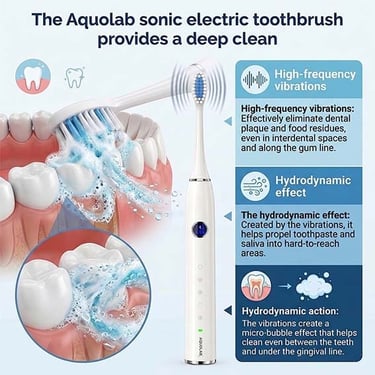
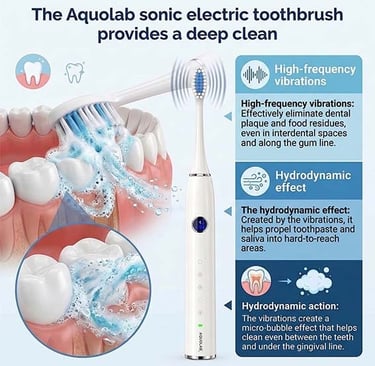
Studies indexed on PubMed show that sonic toothbrushes significantly improve gum health, both in daily use and in cases of gingivitis. They effectively reduce bacterial plaque, the main cause of inflammation, thanks in particular to their hydrodynamic effect. This action results in reduced bleeding and improved gingival indices, as observed in several clinical trials. Meta-analyses also confirm a significant reduction in gingivitis compared to manual toothbrushes, making them a particularly suitable solution for gingival inflammation.
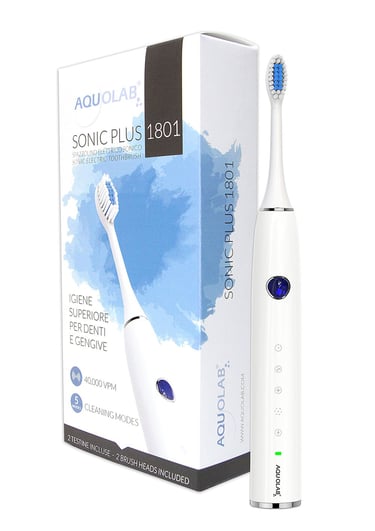
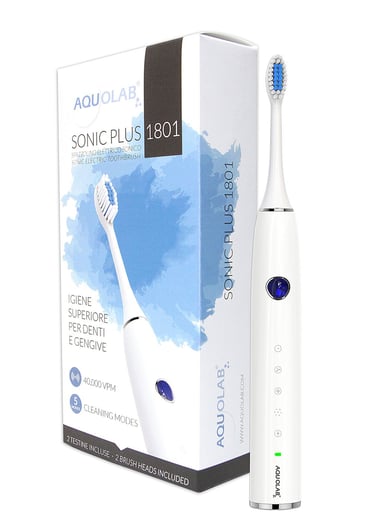
Aquolab Sonic Toothbrush|Best complement to your toothpaste for gingivitis
Discover a new generation of oral hygiene with the Aquolab sonic toothbrush, specially designed to effectively combat gingivitis while respecting your gums. Thanks to its high-frequency technology (up to 40,000 vibrations per minute), it generates microbubbles capable of dislodging plaque even below the gum line , where traditional toothbrushes can't reach. Equipped with soft, rounded bristles, it cleans deeply without irritating sensitive tissues, while also offering a "Gum Care" mode dedicated to massaging and stimulating gums, promoting their daily health. Ideal for those prone to bleeding gums or inflammation, this toothbrush offers a precise, gentle, and thorough clean, helping to reduce gingivitis over time and achieve healthier gums day after day.
Water flosser for gingivitis care
The French Union for Oral Health (UFSBD) recommends water flossers because they complement brushing by removing plaque from between teeth. They reduce gingivitis, improve gum health, and facilitate hygiene for people with braces, implants, or those who have difficulty flossing.
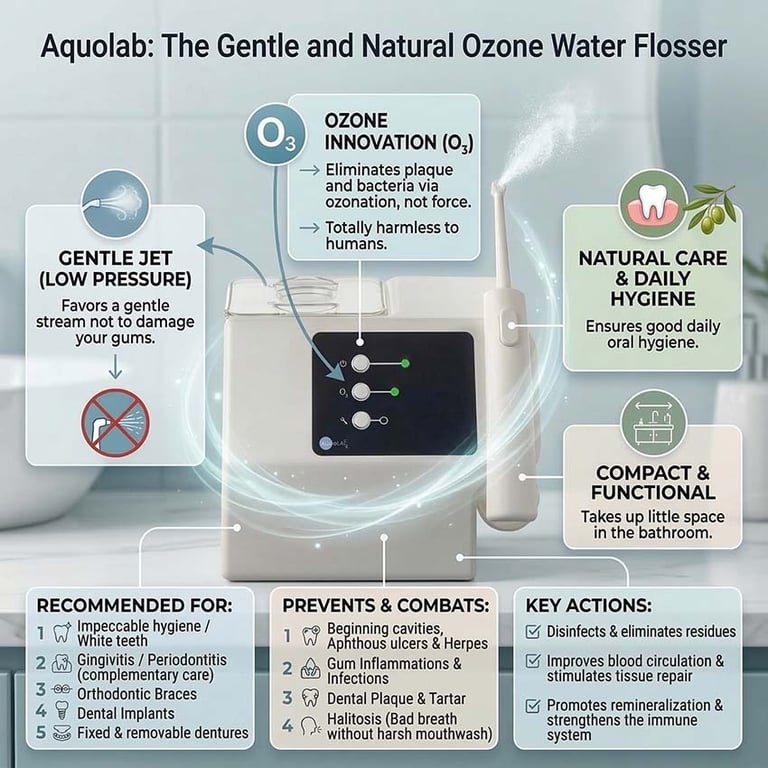
Ozone is of increasing interest in the management of gingivitis due to its biological properties. It possessesbroad antimicrobial activity, particularly against key bacteria such as Porphyromonas gingivalis, implicated in periodontal diseases. It also exerts anti-inflammatory effects and promotes the healing of gingival tissues. Clinically, several studies report a reduction in gingival inflammation, pocket depth, and gingival bleeding, suggesting a benefit as an adjunct to conventional treatments. Ozone reduces bacteria and inflammation, improves gingivitis and periodontitis (clinical study , PCM , MDPI , CUREUS , PCM).
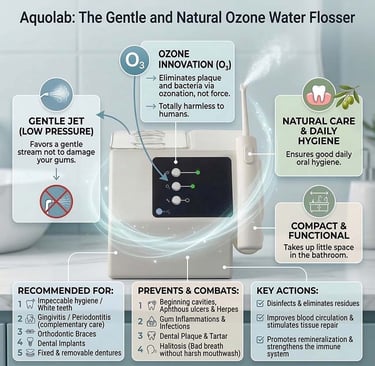
The best home care for gingivitis : Aquolab Water Flosser
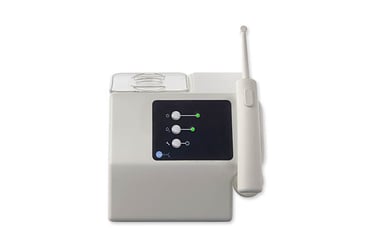
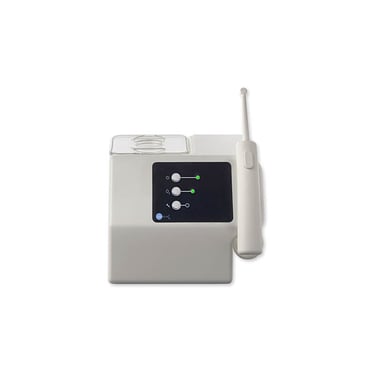
Discover a new approach to oral hygiene with the Aquolab ozone water flosser . Thanks to the combination of a gentle water jet and the disinfecting action of ozone, it effectively eliminates the bacteria responsible for gingivitis while respecting sensitive gums. Daily use helps reduce inflammation, limit bleeding, and prevent gum infections. A truly comprehensive treatment, it deeply cleanses, promotes tissue healing, and improves overall oral health. Non-invasive, eco-friendly, and residue-free, Aquolab is an innovative solution for the long-term treatment of gingivitis and the restoration of healthy gums.
Ozonated water is an antimicrobial agent that reduces dental plaque, inflammation, and gum bleeding. Results show clinical improvement in gingivitis, particularly with the use of an ozone water flosser. (Clinical study )
Interdental brushes and dental floss: beware of the danger to your gums
Interdental brushes and dental floss are used to remove plaque between teeth, but improper use can irritate the gums. Excessive pressure, the wrong size, or a rough motion can cause bleeding and inflammation. It is therefore important to adopt a gentle technique, adapted to your teeth, to protect your gums. Opt for a water flosser with gentle pressure and a disinfectant for gum health.
Conclusion: For whom and why choose a gingivitis toothpaste with natural ozone?
For those with sensitive gums or mild to moderate gingivitis, a natural formulation incorporating stabilized ozone (via ozonated oil or ozonated water), micro-hydroxyapatite, olive oil, and sage extract, and free of SLS, offers several advantages: gentle antimicrobial action, support for remineralization, and improved local tolerance. Professional ranges like Aquolab's OZONIC exemplify this approach by offering "remineralizing and antibacterial" toothpastes focused on gum health.
Continue reading...
© 2024. All rights reserved.