hygiene-precision: distributor of Aquolab products





Tooth abscess | Gum abscess
Suffering from a tooth or gum abscess? Discover how natural ozone care can help disinfect, soothe inflammation, and relieve pain before your dental appointment.
This article was written by the Hygiène Précision team, based on scientific data and rigorous clinical studies. Updated on 04/09/2026
5/6/20266 min read
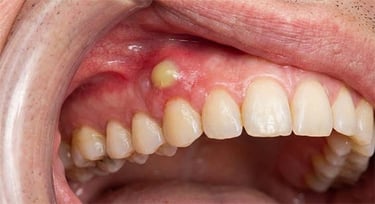
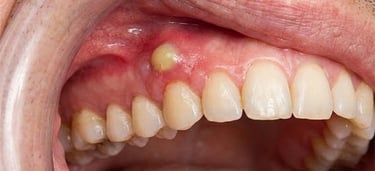
A throbbing pain, swollen gums, difficulty chewing... Many of us tend to put off going to the dentist. However, a tooth abscess or Gum abscess are not just simple toothaches: they are serious bacterial infections that require prompt intervention and thorough disinfection to prevent any recurrence.
Discover how to identify an abscess, the risks involved, and how modern technologies, such as ozone therapy, are essential tools for healing an abscess.
This article contains the following:


1. Tooth abscess vs Gum abscess
Although both conditions cause pain and swelling, a tooth abscess and a gum abscess have different causes and require different treatments. Knowing the difference can help you seek the right dental care before the infection worsens.
What Is a Tooth Abscess?
A tooth abscess is a pocket of pus caused by a bacterial infection inside the tooth or at the tip of its root. It usually develops as a result of untreated tooth decay, a cracked tooth, or dental trauma. Common symptoms include severe toothache, sensitivity to hot or cold, facial swelling, and sometimes fever. Treatment often involves root canal therapy or tooth extraction, along with drainage of the infection.
What Is a Gum Abscess?
A gum abscess (also called a periodontal abscess) is a localized infection that forms in the gum tissue, usually due to advanced gum disease, trapped food particles, or bacteria entering a periodontal pocket. It typically causes a swollen, red, and tender area on the gums, pain when chewing, and pus drainage. Treatment includes cleaning the infected area, draining the abscess, and managing the underlying gum disease.
2. Tooth abscess symptoms | Gum abscess symptoms
A tooth abscess and a gum abscess are both bacterial infections that require prompt dental treatment, but they affect different parts of the mouth. A tooth abscess develops inside or around the tooth, usually as a result of untreated tooth decay or trauma. A gum abscess forms in the gum tissue, often due to gum disease or a foreign object trapped beneath the gumline. Although their symptoms are similar, identifying the source of the infection helps determine the appropriate treatment.
If you experience severe pain, facial swelling, pus, or fever, contact a dentist immediately. An untreated abscess can spread to surrounding tissues and lead to serious complications.
3. Tooth abscess picture | Gum abscess picture
A tooth abscess and a gum abscess are both bacterial infections, but they affect different tissues and require different treatments. A tooth abscess develops inside the tooth or at the root tip, usually following untreated tooth decay, trauma, or a cracked tooth. It often causes severe, throbbing tooth pain and sensitivity to hot or cold. A gum abscess, on the other hand, forms in the gum tissue due to periodontal disease or debris trapped beneath the gumline. It typically appears as a painful, swollen bump filled with pus. In both cases, early dental treatment is essential to drain the infection, relieve pain, and prevent it from spreading to surrounding tissues or the jawbone.


4. Oral infection and risks of complications
Ignoring an abscess allows bacteria to migrate to vital organs via the bloodstream.
5. Tooth abscess treatment | Gum abscess treatment
Both tooth abscesses and gum abscesses require prompt dental treatment to eliminate the infection and prevent complications. A tooth abscess is usually treated with root canal therapy to remove the infected pulp or, if the tooth cannot be saved, by tooth extraction. A gum abscess is typically treated by draining the pus, cleaning the periodontal pocket, and removing plaque and tartar. In some cases, antibiotics may be prescribed if the infection has spread or is accompanied by fever or facial swelling. While pain relievers and warm saltwater rinses may temporarily ease discomfort, they do not cure the infection. Early treatment is essential to preserve oral health and prevent the abscess from spreading to surrounding tissues.
6. Gum abscess treatment at home
Once the dentist has treated the abscess (drainage or root canal), the biggest challenge is eliminating 100% of the residual bacteria to prevent the infection from recurring. This is where ozone therapy comes in.
Why use ozone after treatment?
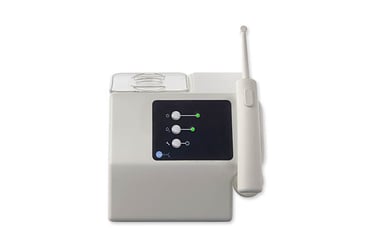
The Aquolab ozone water flosser is an oral hygiene device that combines the mechanical action of a water flosser with the disinfecting properties of ozone, produced directly within the device and mixed with water. This combination provides a more comprehensive action than a conventional water flosser: ozone acts as an antibacterial and antifungal agent. It reduces the microbial load responsible for oral infections. In the case of a dental abscess, often linked to a localized bacterial infection, the use of such a device is presented as a support for daily hygiene, aiming to limit bacterial proliferation and improve gum health in addition to treatment provided by a dentist. Ozone is thus highlighted for its disinfectant potential and its role in preventing gum inflammation, which could help to sanitize the oral cavity around the infected area.
Ozone ( O₃ ) is a gas with powerful oxidizing properties, capable of destroying bacteria, viruses and fungi in seconds.
Total disinfection: Unlike liquids, ozone gas penetrates the micro-channels of the tooth and inaccessible gingival pockets.
Accelerated healing: Ozone stimulates blood microcirculation and tissue oxygenation, allowing the gum to deflate much faster.
Painless treatment: The application is quick, non-invasive and significantly reduces the need for oral antibiotics.
It does not replace drainage, endodontic treatment, or antibiotics if necessary.
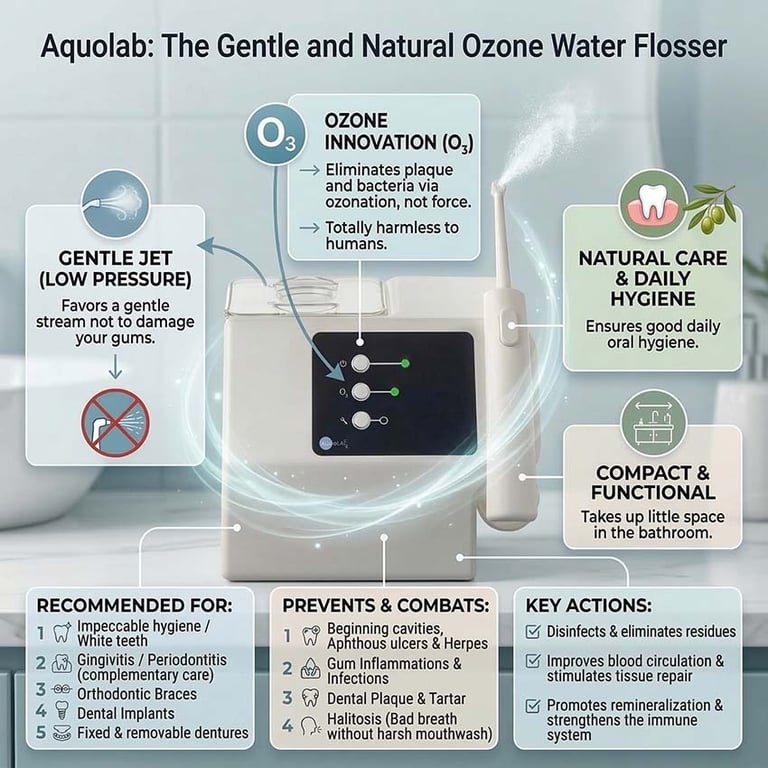
Testimonials from a user:
"I bought the Aquolab ozone water flosser six months ago. The results are fantastic: no infections, cavities, etc. I've eliminated all the problems I had before using Aquolab." RM
Example of an infection case treated with the Aquolab ozone dental jet:
Aquolab has demonstrated the effectiveness of its ozone dental jet in treating oral infections such as black hairy tongue. Sources: 2017_08_Aquolab - case report_lingua nigra_Dott.ssa Casu_Cagliari_NN STAMPARE_ INGLESE
Here are the key points to remember:
Effectiveness and speed: A single session resulted in almost total remission in just one week.
Antimicrobial action: Ozonated water has proven more effective than conventional treatments, such as clotrimazole, in reducing the presence of microbes.
Safety and comfort: This treatment has no side effects. It is less toxic to tissues than standard products and provides immediate relief from burning sensations.
7. How to prevent abscesses with ozone and maintain a healthy mouth on a daily basis?
Prevention remains your best defense. In addition to standard precautions, ozone offers enhanced protection.
In-office (Active Prevention)
Regular ozone therapy sessions help to "sterilize" periodontal pockets before the infection develops into an abscess. It is an excellent preventative treatment for patients prone to gingivitis.
At home (Precision hygiene)
Thorough brushing: Twice a day with a soft, gum-friendly brush and an ozone disinfectant toothpaste .
Dental floss and interdental brushes: Essential for removing plaque. Be careful with your gums; use the gentle setting of a low-pressure water jet.
Ozonated products: Using a dental jet to treat an infection (on the advice of your practitioner) helps to maintain a healthy oral flora and limit bacterial proliferation and the harmful effects of certain mouthwashes. Using an ozone dental irrigator like Aquolab effectively removes bacteria...
Tooth Abscess Emergency?
A tooth abscess is a dental emergency because the infection will not heal on its own and can spread to the surrounding tissues, jawbone, or even other parts of the body if left untreated. Early treatment is essential to relieve pain, stop the infection, and save the affected tooth whenever possible. If you experience severe tooth pain, facial swelling, difficulty swallowing, or fever, seek emergency dental care immediately.
Good Reflexes
Book an emergency dental appointment as soon as possible. Only a dentist can drain the abscess and treat the source of the infection.
Apply a cold compress to the outside of your cheek to help reduce swelling and relieve pain.
Rinse your mouth with warm salt water several times a day to help keep the area clean until you receive professional treatment.
What to Avoid
Never try to pop or drain the abscess yourself, as this can spread the infection.
Do not take antibiotics without a prescription, as inappropriate use contributes to antibiotic resistance.
Avoid taking anti-inflammatory medications (such as ibuprofen) without medical advice, as they may mask symptoms and delay appropriate treatment.
Conclusion: Act quickly and precisely
A dental abscess is never inevitable. Thanks to advances in dentistry and the effectiveness of ozone treatments, it is now possible to treat these infections quickly while ensuring perfect disinfection.
Don't let a minor aches and pains become a major health risk. Consult your doctor regularly and ask for advice on the benefits of ozone therapy.


Continue reading...
© 2024. All rights reserved.