hygiene-precision: distributor of Aquolab products




Dental Airflow Cleaning vs. Ultrasonic Cleaning Teeth
Discover the difference between air polishing and ultrasonic scaling. Which treatment is best for your gums and the radiance of your smile? A complete guide.
This article was written by the Hygiène Précision team, based on scientific data and rigorous clinical studies. Updated on 10/09/2026
5/6/20268 min read
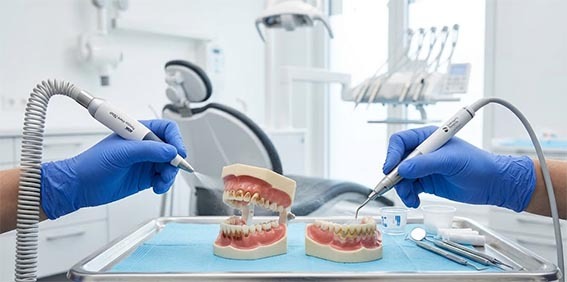
Maintaining a healthy mouth inevitably requires professional dental care. Among the most commonly used techniques for teeth cleaning today are ultrasonic scaling and dental air polishing. But what is the difference between air polishing and ultrasonic scaling? And above all, which method is best suited to your needs?
This article contains the following:
Ultrasonic scaler | ultrasonic cleaning teeth
Ultrasonic scaler or ultrasonic cleaning teeth is a classic and widely used technique. It involves removing tartar (or dental calculus) deposits that naturally form on teeth over time. Tartar is a hardened mass of dental plaque composed of minerals from saliva, bacteria, and food debris.
How do ultrasound devices work in dentistry?
The dentist or dental hygienist uses an ultrasonic scaler. This device sends out rapid sonic vibrations that break up tartar deposits without damaging the enamel. A jet of water usually accompanies the process to flush away residue and cool the device.
What are the advantages of ultrasonic descaling?
✅ Effective tartar removal , even below the gum line
✅ Prevention of periodontal diseases : gingivitis, periodontitis, gingival recession
✅ Improved breath and teeth appearance
Descaling is recommended once or twice a year depending on the amount of tartar produced.
Dental airflow cleaning |dental air polishing
Dental airflow cleaning or dental air polishing is a gentler and less invasive method than scaling. It is particularly suitable for regular dental maintenance and cosmetic cleaning.
The principle of the professional air polisher
A dental air polisher projects a combined jet of air, water, and powder (usually sodium bicarbonate or glycine) onto the teeth. This action removes plaque, surface stains (from tobacco, coffee, red wine), and food residue, while preserving the enamel.
The benefits of air polishing on the plate and stains
✅ Non-invasive method, ideal for sensitive teeth
✅ Removal of superficial stains and brightening of the smile
✅ Ideal preparation before teeth whitening
✅ Comfort and speed: the treatment is often more pleasant than traditional tartar removal
Air polishing effectively removes biofilm. At home, using a sonic toothbrush helps maintain this result by removing residual daily plaque without irritating the gums.
Subgingival aeropolishing: a modern approach to periodontal health
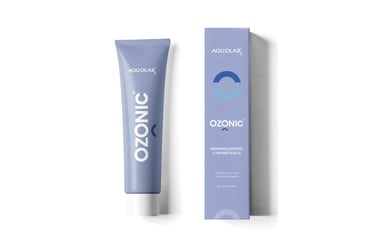
Subgingival aeropolishing is now an innovative solution in the management of periodontal diseases. According to a scientific journal comprising 55 studies, this technique effectively eliminates the bacterial biofilm responsible for gum inflammation while better preserving dental and periodontal tissues. Unlike manual or ultrasonic instruments, aeropolishing uses fine powders, especially those based on glycine or erythritol, which offer a gentle and low-abrasive action. The clinical results observed are comparable to traditional methods, with a notable advantage: better comfort for the patient during care. That is why Aquolab’s ozone products help you every day to maintain the benefit of professional care.
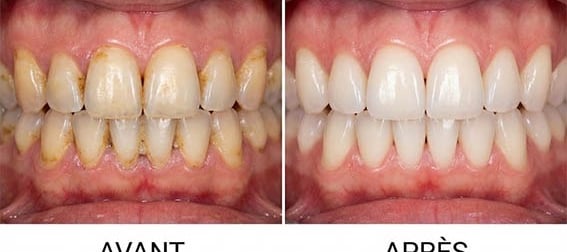
Airflow teeth cleaning before and after
The results of Airflow teeth cleaning before and after are often noticeable from the first appointment. Before the treatment, teeth may appear stained or less bright due to plaque buildup and surface discoloration caused by coffee, tea, red wine, smoking, or daily food habits. These deposits can make the smile look dull, even with regular brushing and good oral care.
After an Airflow teeth cleaning session, teeth usually look cleaner, smoother, and brighter. The treatment uses a combination of air, water, and fine powder to gently remove plaque, biofilm, and surface stains while preserving the natural tooth structure. Unlike teeth whitening, Airflow does not change the natural color of the teeth; instead, it restores their original appearance by removing the stains and deposits that cover the enamel.
Many patients experience a fresher feeling, a smoother tooth surface, and a more polished smile immediately after the procedure. Regular Airflow cleaning can also support better oral hygiene by helping maintain healthy gums and reducing the accumulation of plaque in hard-to-reach areas.
The results of before and after an airflow teeth cleaning are immediately visible. Teeth regain their natural shine thanks to the removal of bacterial biofilm and surface stains (coffee, tobacco). The smile is brighter and the enamel surface is perfectly smooth.
Choices based on your profile:
If you have visible tartar or signs of gingivitis, ultrasonic scaling is essential.
If your teeth are well cared for on a daily basis, air polishing is sufficient to maintain their shine.
The best solution? A combination of both: descaling to remove tartar, followed by air polishing to polish and beautify.
Is airflow teeth cleaning painful?
Airflow teeth cleaning is generally considered a comfortable and painless dental treatment. Unlike traditional scaling methods that rely on scraping instruments, Airflow uses a gentle stream of air, water, and fine powder to remove plaque, stains, and bacteria from the teeth. Most patients experience only a mild tingling sensation or a feeling of pressure during the procedure. Some people with sensitive teeth or inflamed gums may notice slight discomfort, but this is usually temporary. Overall, Airflow cleaning is a minimally invasive technique that helps improve oral hygiene while providing a more pleasant experience for many patients.
Aiflow teeth cleaning side effects
Airflow teeth cleaning is generally considered a safe and gentle dental treatment, but some temporary side effects may occur after the procedure. Patients may experience mild tooth sensitivity, slight gum irritation, or a feeling of discomfort, especially if they have sensitive teeth or existing gum issues. Some people may also notice minor bleeding from the gums, which usually disappears quickly. In rare cases, the polishing powder used during Airflow cleaning can cause irritation in the mouth or throat. These effects are typically short-lived, and maintaining good oral hygiene along with following your dentist’s advice can help ensure a comfortable recovery.
Why combine dental airflow cleaning and ultrasonic scaler in the dental office?
Far from being opposed, ultrasonic scaling and air polishing are actually two inseparable and complementary treatments. During a prophylactic hygiene session at the dental office, their combined action provides a complete cleaning that is both therapeutic and aesthetic.
Here's why your dentist usually chooses to combine these two technologies:
Complete removal of the various deposits
The two techniques target completely different elements, but they are equally harmful to oral health:
The ultrasonic scaler acts on the solid: It fragments and removes the hardened (calcified) tartar accumulated above and below the gum, where the bristles of the brush can no longer do anything.
The air polisher acts on the soft and superficial: It takes over to sweep away the invisible bacterial biofilm, residual dental plaque and exogenous stains (coffee, tea, tobacco) lodged in the smallest crevices of the enamel.
Enamel smoothing to prevent recurrence
Using an air polisher immediately after a dental cleaning is not simply a convenience bonus. The ultrasound, by breaking up tartar, can leave microscopic roughness on the tooth surface.
If the enamel remains rough, bacteria will adhere to it twice as fast. The spray propelled by the air polisher (often based on sodium bicarbonate or glycine) perfectly polishes and smooths the enamel. A perfectly smooth surface significantly delays the reformation of dental plaque.
The ideal combination for gum health
By combining the power of ultrasound with the gentleness of air polishing, the practitioner provides a comprehensive treatment to sanitize the entire oral environment. This holistic approach is the best way to prevent gum inflammation ( gingivitis ), the development of periodontal pockets, and to halt the progression of periodontitis. You leave the office with protected teeth and a noticeably brighter smile.
What to do after dental airflow cleaning | ultrasonic cleaning teeth
Having your teeth professionally cleaned with ultrasonic scalers or air polishers provides an unparalleled feeling of cleanliness. However, after the first meal, dental biofilm begins to form again. Without a rigorous home care routine, plaque will mineralize once more, leading to tartar buildup in just a few weeks.
To space out your dental appointments and maintain a radiant smile, here are the essential steps to adopt daily.
High-precision brushing with sonic technology
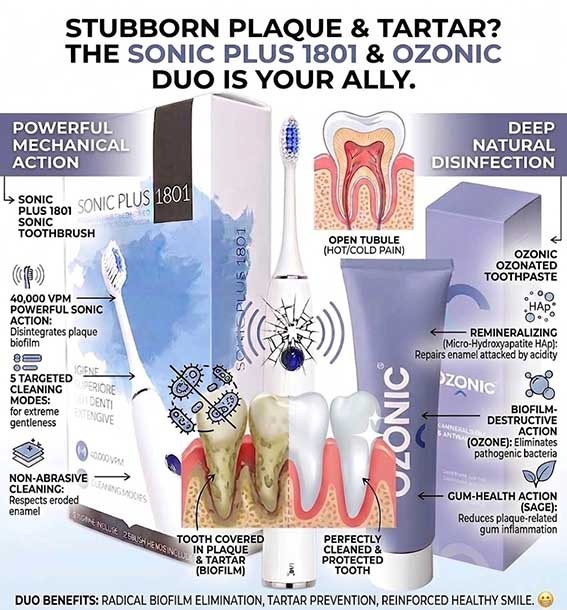
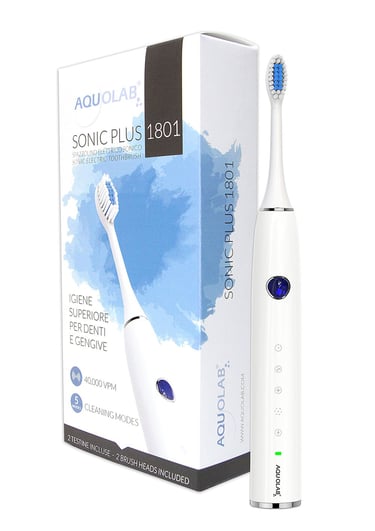
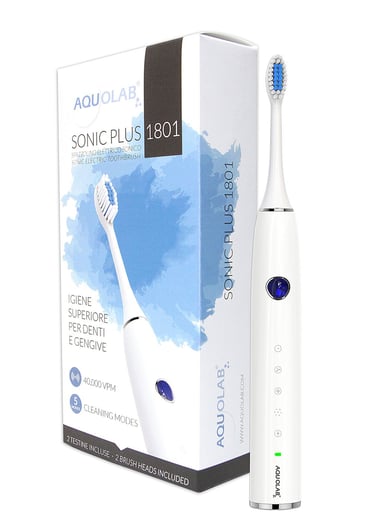
Manual brushing quickly proves inadequate when faced with food particles embedded between teeth. To maintain the smooth finish achieved after air polishing, using a sonic electric toothbrush is ideal.
Thanks to its high-frequency vibrations, it reproduces the perfect sweeping motion and creates microbubbles of saliva capable of removing dental plaque right below the gum line, without ever damaging the enamel or irritating the gingival tissue.
Interdental cleaning: The alternative to dental floss and interdental brushes
Tartar builds up primarily where the toothbrush can't reach: between the teeth. While traditional dental floss and interdental brushes are often tedious or irritating to sensitive gums, a water flosser (or dental water jet) is the preferred solution.
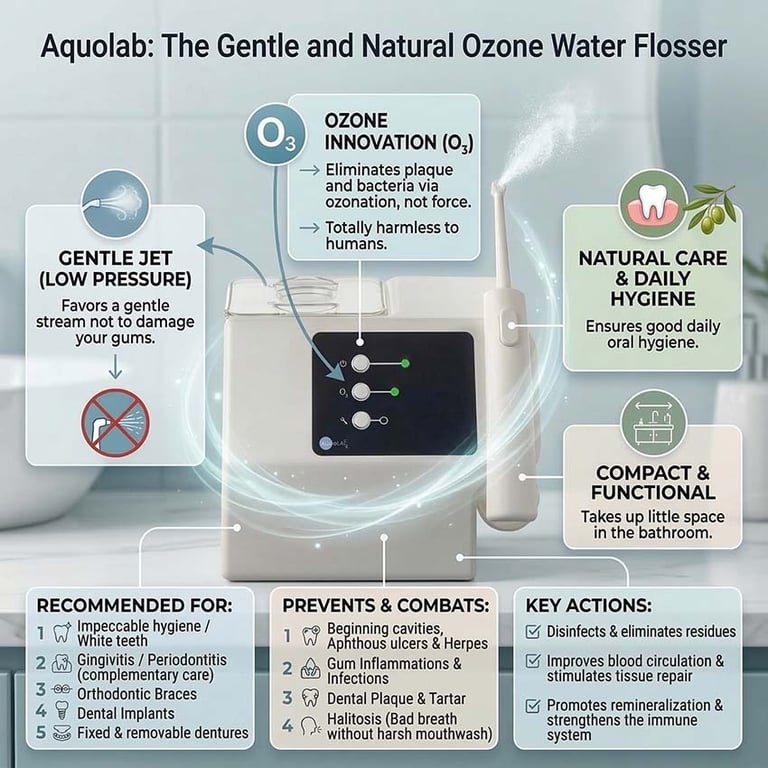
For professional-grade effectiveness at home, the Aquolab care system goes beyond a simple jet of water. By combining a calibrated-pressure water jet with the action of ozone, this high-end water flosser destroys the anaerobic bacteria responsible for periodontal pockets and subgingival tartar. It's the secret to maintaining healthy, pink gums that are perfectly protected from irritants.
Clinical studies demonstrate that the Aquolab ozonated water flosser improves plaque and gum bleeding reduction, with results superior to those obtained with chlorhexidine. Thanks to the combined action of the water jet and ozone, Aquolab effectively reduces bacteria responsible for periodontal disease and promotes tissue healing without side effects. These results have been demonstrated in studies conducted in orthodontics and periodontology: https://pubmed.ncbi.nlm.nih.gov/30919638/ and https://pubmed.ncbi.nlm.nih.gov/35887871/ . Used for daily prevention as well as in conjunction with dental care, Aquolab is an innovative, safe, and biocompatible solution for sustainably improving oral hygiene.
A helpful tip: After air polishing, avoid consuming coffee, tea, red wine, or tobacco for at least 48 hours. Freshly cleaned enamel is temporarily more porous and absorbs color pigments more easily.
Conclusion: Difference between Air Polisher and Ultrasonic Descaling – A Question of Need
Ultimately, there's no point in pitting air polishers against ultrasonic scalers: these two technologies don't compete, they complement each other. The choice between the two depends primarily on the current condition of your teeth and your treatment goals.
To summarize the situation simply:
Ultrasonic scaling is an essential therapeutic procedure. It's the intensive medical treatment that eliminates calcified deposits (tartar) that your toothbrush can't remove. It actively protects your gums and prevents periodontal disease.
Air polishing, on the other hand, is akin to a high-precision aesthetic finishing process. By propelling a mixture of air, water, and soft powders, it eliminates invisible biofilm as well as superficial stains caused by food or tobacco. It polishes the enamel surface for an immediate whitening effect and a smoother feel.
In most dental practices, the ideal session combines both techniques: ultrasound cleans the foundations deeply, while the air polisher refines the brightness of the smile on the surface.
The secret lies in consistency.
Remember that professional dental care in the office is no substitute for impeccable daily oral hygiene. To extend the time between appointments and maintain healthy gums, using suitable at-home technologies like sonic toothbrushes and ozone oral irrigator remains your best weapon against tartar buildup and bacterial growth. Your needs change, but prevention is key to a radiant smile!
Continue reading...
© 2024. All rights reserved.