hygiene-precision: distributor of Aquolab products





Plaque on teeth | Oral baceria
What bacteria are responsible for dental plaque (cavities, periodontitis)? Discover how to eliminate them effectively and naturally.
This article was written by the Hygiène Précision team, based on scientific data and rigorous clinical studies. Latest update 02/09/2026
5/6/20267 min read
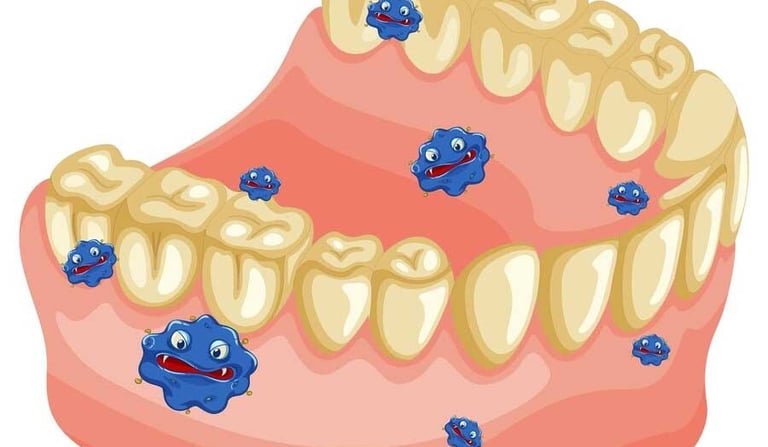
Dental plaque is much more than just a deposit on teeth. It is a true bacterial biofilm composed of millions of microorganisms that colonize the surface of teeth and gums. When this oral biofilm is not effectively removed, it promotes the development of numerous diseases such as cavities, gingivitis, and periodontitis.
Understanding which bacteria are responsible for dental plaque allows for better oral hygiene and helps prevent complications related to an unbalanced pathogenic flora.
This article contains the following:
What is plaque on teeth?
Plaque on teeth is not simply a deposit of food debris. It is a highly organized biological structure called oral biofilm.
Dental plaque composition
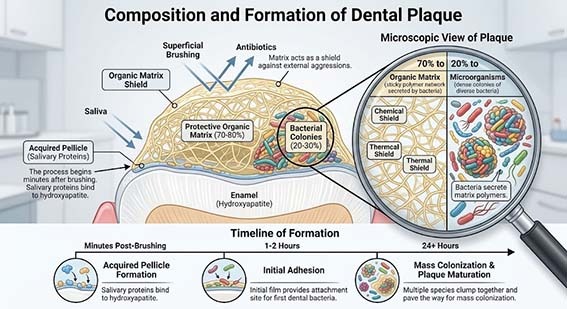
The composition of dental plaque can be divided into two main groups:
The organic matrix (70% to 80%): A network of sticky polymers secreted by the bacteria themselves. This matrix acts as a thermal and chemical shield that protects the bacteria on the teeth against external aggressions (saliva, superficial brushing, antibiotics).
Microorganisms (20% to 30%): Hundreds of species of bacteria in the mouth that clump together in dense colonies.
The process begins just minutes after brushing. Salivary proteins bind to hydroxyapatite (the main mineral component of tooth enamel). It is on this initial film that the first dental bacteria attach, paving the way for mass colonization.
Types of plaque on teeth
Dental plaque develops in stages. It starts as a soft, invisible film that can be removed with daily brushing and flossing. If it is not removed, it hardens into tartar, which can only be eliminated by a dental professional.
Slight Plaque on Teeth
Slight plaque is a soft, sticky layer of bacteria that forms on the teeth throughout the day. It develops after eating and drinking, especially sugary or starchy foods. At this stage, plaque is usually colorless or pale yellow and can be easily removed with proper brushing, flossing, and good oral hygiene.
Excessive Plaque on Teeth (Tartar)
When plaque is left on the teeth for several days, it hardens into tartar (dental calculus). Tartar appears as a yellow, brown, or black deposit along the gumline and cannot be removed with a toothbrush alone. Excessive plaque and tartar buildup increase the risk of gingivitis, periodontitis, bad breath, and tooth decay. Regular professional dental cleanings are essential to remove tartar and maintain healthy teeth and gums.


Plaque on Teeth Causes
Dental plaque is a sticky film of bacteria that constantly forms on your teeth. It develops when bacteria mix with food particles and sugars left in the mouth. If plaque is not removed by regular brushing and flossing, it hardens into tartar, increasing the risk of cavities, gingivitis, and gum disease.
Several factors can promote plaque buildup, including poor oral hygiene, a diet high in sugar, dry mouth, smoking, and wearing braces or dental appliances. Brushing twice a day, flossing daily, and having regular dental cleanings are the best ways to prevent plaque from accumulating.
The process involves several steps:
Formation of a salivary film on the teeth
Adhesion of the first bacteria in the mouth
Rapid multiplication of microorganisms
Creation of a structured dental bacterial biofilm
Accumulation of pathogenic bacteria
When this oral biofilm matures, it protects bacteria against antimicrobial agents and makes their elimination more difficult.
That is why a simple mouth rinse is not enough to effectively eliminate bacteria on the teeth.
How to remove plaque on teeth?
Permanently eliminating a pathogenic dental bacterium requires combining rigorous mechanical action at home with targeted therapeutic care.
2. Plaque on teeth toothpaste
Choose the best toothpaste to fight against plaque on teeth.
Disinfectant toothpaste: Complement your brushing with a fluoride-free, natural hydroxyapatite toothpaste like Ozonic.
Interdental brushing: Daily use of interdental brushes or dental floss is helpful for dislodging bacteria that accumulate between the teeth, where most cases of gingivitis originate. Care should be taken when using them to avoid injuring your gums.
💡 Quick tip: low-pressure water jets are gentler on gums than interdental brushes and dental floss.
3. Plaque on teeth water flosser
Faced with the resistance of biofilm, the use of advanced hydropropulsion is a game changer. A system like Aquolab, which injects ozone-enriched water, offers superior clinical efficacy.
Ozone is a powerful natural oxidant. By attacking the cell membrane of anaerobic bacteria and Streptococcus mutans, ozonated water destroys pathogens without disrupting the balance of healthy gut flora and without creating bacterial resistance. It is a cutting-edge, at-home treatment for Streptococcus mutans.
Discover our range of Aquolab ozone dental jets
3. Plaque on teeth professional treatments: scaling and root planing
When the biofilm has mineralized, personal oral hygiene reaches its limits. Scaling and root planing in a dental office is essential.
Scaling: Performed by the dentist using ultrasonic instruments, it allows the removal of supragingival tartar deposits.
Root planing: In cases of established periodontitis, this deep subgingival cleaning cleans the surface of the roots to eliminate the pathogenic flora embedded in the periodontal pockets and allow the gum to reattach to the tooth.

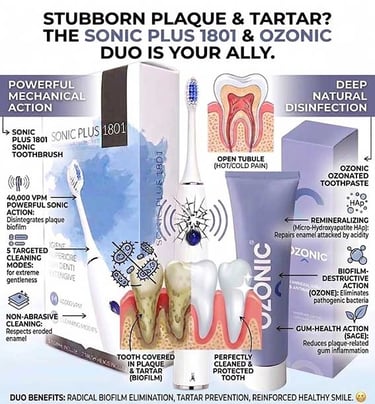


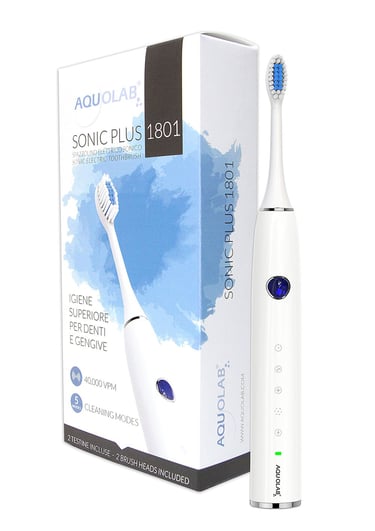
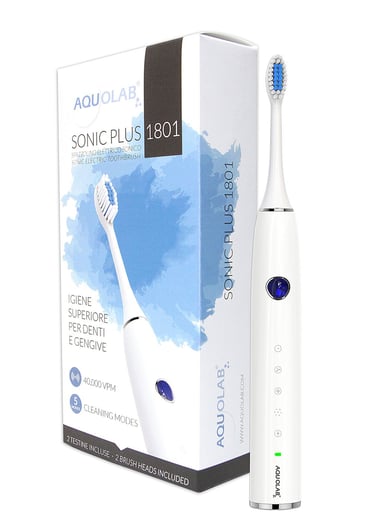
1. Plaque on teeth sonic toothbrush
Conventional brushing is not enough, as it leaves nearly 40% of the tooth surface intact, especially in narrow spaces.
Sonic brushing: Sonic toothbrush technology is particularly effective against dental bacterial biofilm. High-frequency vibrations create microbubbles of saliva, oxygen, and toothpaste, capable of breaking down the plaque matrix, even beyond the direct reach of the brush bristles.
Dental plaque bacteria
Certain bacteria in the mouth play a central role in the development of plaque on teeth, cavities, gingival inflammation, and periodontal diseases.
Streptococcus mutans and sobrinus: the triggers of cavities
Streptococcus mutans is considered the main dental bacterium responsible for dental caries.
This oral bacteria feeds on sugars present in food and produces acids capable of attacking tooth enamel. In the long term, this demineralization promotes the development of cavities.
Streptococcus mutans: most common symptoms
The proliferation of Streptococcus mutans can lead to:
Tooth sensitivity to hot and cold
Bad breath
Appearance of white or brown spots
Dental pain
Rapid formation of bacterial plaque
These streptococcus mutans symptoms often appear gradually, which explains why cavities are sometimes detected late.
Streptococcus mutans: treatment and prevention
Streptococcus mutans treatment is primarily based on:
Rigorous oral hygiene
Reducing refined sugars
The use of toothpaste enriched with hydroxyapatite, ozone or fluoride
Using a water flosser
Daily interdental brushing
Regular checkups with the dentist
In some cases, professional treatment with scaling or cavity treatment will be necessary.
Lactobacillus spp: acidity accelerators
Bacteria of the genus Lactobacillus also contribute to the development of cavities.
They thrive in an already acidic environment and worsen enamel erosion. These dental bacteria are often found in deep cavities and hard-to-clean areas.
Their significant presence is often linked to:
A diet high in sugars
Poor cleaning of bacteria on the teeth
Insufficient oral hygiene
Porphyromonas gingivalis and Actinomyces: the enemies of your gums
Some bacteria in the mouth do not directly cause cavities but attack the gum tissues.
Among them, Porphyromonas gingivalis is strongly implicated in gingivitis and periodontitis.
These bacteria in teeth cause:
Gum inflammation
Bleeding during brushing
Gingival recession
Persistent bad breath
When the infection progresses, more advanced treatment such as root planing may become necessary to eliminate bacteria present under the gum.
The risks of unremoved bacterial plaque on teeth
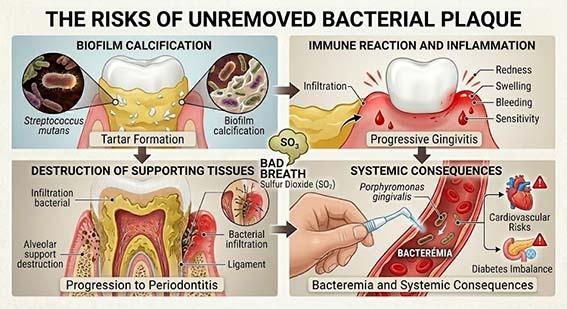
If bacterial plaque thickens without mechanical or therapeutic intervention, it undergoes calcification under the action of salivary minerals, transforming into tartar. Pathological consequences then develop in a cascade.
Gingivitis
The continued presence of bacteria on the teeth at the gum line triggers a local immune response, resulting in red, swollen gums that bleed easily when brushing.
Gingivitis is characterized by the following symptoms :
Redness
Swelling
Bleeding
Gum sensitivity
At this stage, the condition is still completely reversible.
Periodontitis
Without treatment, periodontal disease progresses. Bacteria from the teeth penetrate deeper, destroying the alveolar bone and the periodontal ligament that supports the root. Periodontitis leads to tooth loosening and, eventually, tooth loss. Furthermore, the presence of these bacteria in the bloodstream (bacteremia) is now linked to increased cardiovascular risks and diabetes management.
Bad breath (halitosis)
Bacteria in the mouth produce volatile sulfur compounds responsible for halitosis. Chronic bad breath is often a sign of an imbalance in the oral flora and excessive bacterial growth.
Our tips for preventing the formation of plaque on teeth
To sustainably limit the growth of bacteria in the mouth and preserve the balance of your oral flora:
Brush your teeth at least twice a day
Use a low-pressure water jet like Aquolab for daily interdental cleaningto protect your gums.
Limit foods high in sugar.
Stay well hydrated
Have your teeth professionally cleaned regularly by your dentist.
Use a toothpaste containing hydroxyapatite
Replace your toothbrush regularly and opt for sonic brushing.
Good oral hygiene remains the best protection against bacterial plaque and gum disease.
Conclusion
The bacteria responsible for dental plaque play a major role in the development of cavities, gingivitis, and periodontitis.
The development of dental bacterial biofilm is a natural phenomenon, but its excessive proliferation can have significant consequences for oral health.
Thanks to a suitable routine combining effective brushing, interdental cleaning, regular scaling and innovative solutions such as the ozone water flosser, it is possible to sustainably limit the proliferation of bacteria in teeth and preserve a healthy mouth.
Scientific sources
Continue reading...




© 2024. All rights reserved.