hygiene-precision: distributor of Aquolab products




Oral Health for Seniors | Dental Health for Seniors
How do your teeth change after age 50? Discover the risks of dental ageing (gum recession, gum disease) and our prevention solutions.
This article was written by the Hygiène Précision team, based on scientific data and rigorous clinical studies. Updated on 10/09/2026
5/6/20266 min read
As we age, our bodies change… and so do our teeth. From age 50, and even more so after 60, oral health for seniors becomes a major, often underestimated, concern. Between natural changes, more frequent diseases, and impacts on overall health, it is essential to understand these changes in order to better prevent them.
This article contains the following:
Why oral care is important for ederly people?
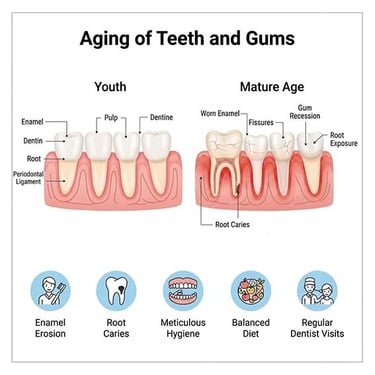
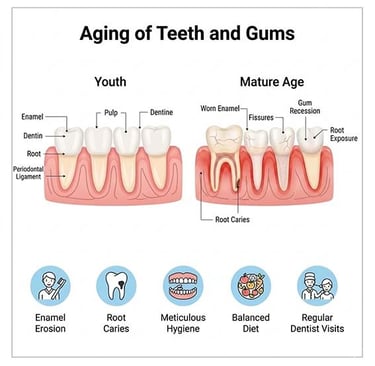
Oral care is important for ederly people because dental ageing, is a natural process, which makes appear gradually several changes at teeth and gums:
Gingival recession and root exposure
The gums tend to recede, exposing the roots of the teeth. This increases sensitivity and promotes so-called "root" cavities, which are particularly common in seniors.
What Harvard says: With age, gums can recede, exposing more tooth surface. Several causes include: overly aggressive brushing, gum disease (gingivitis followed by periodontitis), plaque buildup, etc. Harvard Health
Consequences: increased sensitivity, root exposure, increased risk of root caries, altered aesthetics.
Wear and weakening of the enamel
Over the years, tooth enamel thins due to chewing and food acids. This can lead to:
microcracks
hypersensitivity
teeth yellowing
What Harvard says: Enamel wears down, becomes more translucent, can be stained by certain foods or drinks (coffee, tea), tobacco, and its composition can change (from water, etc.). Harvard Health
Aesthetic and psychological effects: less white smile, possible social discomfort, recourse to whitening products or veneers.
Tooth displacement
Teeth can shift slightly due to pressure from chewing or bone loss from gum disease. This can disrupt occlusion and chewing.
Harvard says: Teeth can shift slightly throughout life due to chewing forces, tongue movements, or bone loss from gum disease. Harvard Health
Impacts: Changes in bite, difficulty chewing or speaking, and the potential need for orthodontics even in adulthood.
Decreased sensitivity
Paradoxically, teeth sometimes become less sensitive with age. But this decreased sensitivity can mask problems (cavities, infections) that are detected too late.
What Harvard says: As we age, dentin thickens, which reduces sensitivity. This may seem like an advantage, but it can mask problems (cavities, infections) until they are quite advanced. Harvard Health
Common dental problems in seniors
With these changes, certain disorders become more common:
Periodontitis and gum recession after age 60
Gingivitis is a common dental infection after age 40. If left untreated, it becomes a serious problem after age 60. Decreased saliva flow and increased plaque buildup lead to gum inflammation, bleeding, and increased sensitivity. If this infection is not treated, it can develop into periodontitis, a more serious disease that can lead to:
receding gums
bone loss
teeth falling out
A review, “Oral Health Across the Lifespan: Older Adults” (NCBI), reports that older adults remain at high risk for cavities, root decay, gum disease, and oral cancer. According to the CDC
(United States), periodontitis affects approximately 60% of adults over 65. Furthermore, certain systemic conditions (such as diabetes) exacerbate these periodontal diseases. ( CNBI , Nature , ADA)
Cavities, particularly root cavities
Decreased saliva production, medications, and root exposure promote the development of cavities, which are often more difficult to detect and treat.
As we age, many people take medications that have xerostomia (dry mouth) as a side effect. This reduces saliva production, disrupting the balance of oral flora and increasing the risk of cavities, irritation, or infections. CNBI , ADA , TuftsNow
The aging of prostheses
Crowns and other dental devices have a limited lifespan (approximately 10 to 15 years). After age 60, their replacement becomes frequent.
Dry mouth
Very common among seniors, it is often linked to medication. It increases the risk of:
cavities
infections
difficulties speaking or eating
A lack of saliva can also make chewing, speaking, and tasting more difficult. CNBI , Harvard Health
A close relationship between oral health and general health for seniors
The mouth does not function in isolation: it is closely linked to the rest of the body.
Diseases that affect the teeth
Certain medical conditions directly affect oral health:
Diabetes, which increases the risk of infections and gum disease
osteoporosis, which weakens the jawbone
Drug treatments are often responsible for dry mouth.
Teeth that influence overall health
Conversely, poor oral health can contribute to:
cardiovascular diseases
respiratory infections such as pneumonia
imbalances in diabetes
Chronic gum inflammation plays a key role in these interactions.
Oral dental problems in seniors: a real impact on quality of life
Dental problems are not just medical issues. They also have daily consequences:
difficulty chewing → unbalanced diet
pain → persistent discomfort
Damaged teeth → loss of self-confidence
aesthetic problems → social isolation
Taking care of your teeth is therefore also about preserving your overall well-being.
Older adults oral health | Teeth care tips at home
Fortunately, these problems are not inevitable. Appropriate prevention can help preserve your teeth for a long time.
Rigorous oral hygiene
Brush for 2 to 3 minutes, twice a day
Soft toothbrush to protect gums
Use of a water flosser, be carefull with dental floss or interdental brushes (brushing alone only cleans about 60% of surfaces)
Regular consultations
A check-up at least once a year with the dentist allows for:
to detect problems early
to perform descaling
to avoid complications
A healthy lifestyle
balanced diet, low in sugars and acids
sufficient hydration
quitting smoking
alcohol restriction
Special attention will be paid to medical treatments.
If you are taking medication:
report their use to the dentist
monitor for side effects such as dry mouth
Improving oral health of older adults for healthy ageing
Here are some strategies to minimize the effects of oral aging, according to the current state of knowledge.
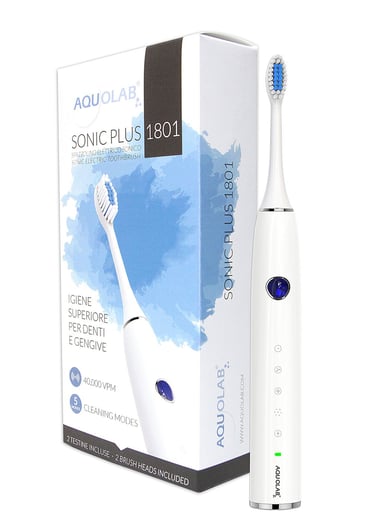
The French Union for Oral Health (UFSBD) recommends using an electric toothbrush to improve brushing effectiveness while being gentle on sensitive gums. It also advises using a water flosser, a useful complement for removing plaque between teeth and under the gum line, where a regular toothbrush is insufficient for daily use.
Strengthen your teeth and gums with the Aquolab products
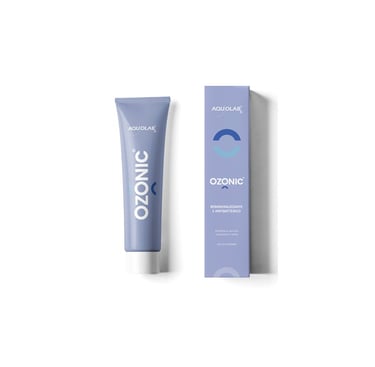
Ozone possesses effective antibacterial properties against dental plaque, significantly reducing bacteria responsible for cavities and gingivitis, while complementing traditional brushing ( study on ozonated water and dental plaque ; review on ozone in dentistry ). Achieve perfect enamel disinfection and gum oxygenation with a clinical-grade ozone water flosser.




Brush gently with a soft-bristled toothbrush,
using an up-and-down motion to avoid irritating the gums.
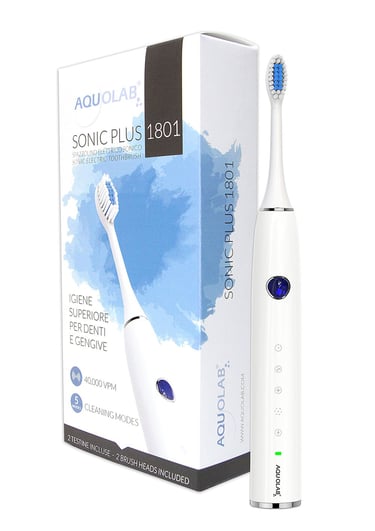
A sonic toothbrush with a sensitive setting is recommended.
Use a water flosser to remove plaque between your teeth
and under your gums. Use an ozone oral irrigator for gentle yet thorough disinfection.
Ozonated or fluoride products: ozone or fluoride toothpastes, fluoride nail polishes as recommended in dental office.
Ada , ScienceDirect
Regular checkups with dentists
Early detection of periodontal diseases, deep cleaning ( scaling, root planing ) when necessary.
X-rays if needed to assess bone loss, roots, etc.
For coloring: options include controlled whitening, veneers, and sometimes prostheses or crowns.
Managing the side effects of medications / medical conditions
If a medication dries out the mouth, discuss alternatives with the doctor/dentist, stimulate salivation, use tissues, lozenges, or saliva substitutes.
Controlling systemic diseases like diabetes, maintaining stable blood sugar levels, as this has a direct impact on the gums.
Lifestyle changes
Avoid tobacco, reduce consumption of substances/colorants (coffee, tea, wine), avoid overly acidic drinks.
Have a balanced diet, rich in vitamins (especially vitamin C), calcium, phosphorus, etc.
Sufficient hydration, stimulation of saliva.
Corrective options if damage has occurred
Gum surgery or gum grafts to cover exposed areas.
Adult orthodontics (clear aligners, braces) to correct tooth movement.
Prostheses, implants, bridges to replace lost teeth.


Solutions exist in case of problems
If damage is already present, several options exist to restore function and aesthetics:
crowns to protect damaged teeth
bridges or implants to replace missing teeth
removable prostheses
gum treatments (deep scaling, surgery)
adult orthodontics if necessary
Conclusion
The aging of teeth and gums is a natural phenomenon, but its consequences can be largely limited. Between physiological changes, diseases, and lifestyle factors, oral health after 50 or 60 years of age relies primarily on prevention, vigilance, and regular checkups.
Taking care of your teeth isn't just about preserving your smile; it's about protecting your overall health and quality of life in the long term. Aquolab ozone treatments support you throughout your life for better dental hygiene.



Continue reading...
© 2024. All rights reserved.